
“It was the sweetest, most mysterious-looking place anyone could imagine,” writes Frances Hodgson Burnett in her 1911 novel The Secret Garden. The description belongs not just to fiction, and could just as easily apply to the small pockets of greenery scattered across London.
The City of London is better known for glass towers and aggressively short lunch breaks than hidden greenery. Yet, tucked between offices, churches and legal chambers are small gardens offering rare moments of quiet in the capital’s most intense square mile. I stumbled across the Phoenix Garden in Soho one overheated afternoon, down a narrow passage behind the theatres. It was a pocket of dense planting and wooden benches that felt impossibly calm given the traffic just beyond the railings.
As rates of burnout rise, and the city’s pace shows no sign of slowing, these overlooked gardens offer something restorative: a free way to step out of the city without leaving it.
St Dunstan-in-the-East
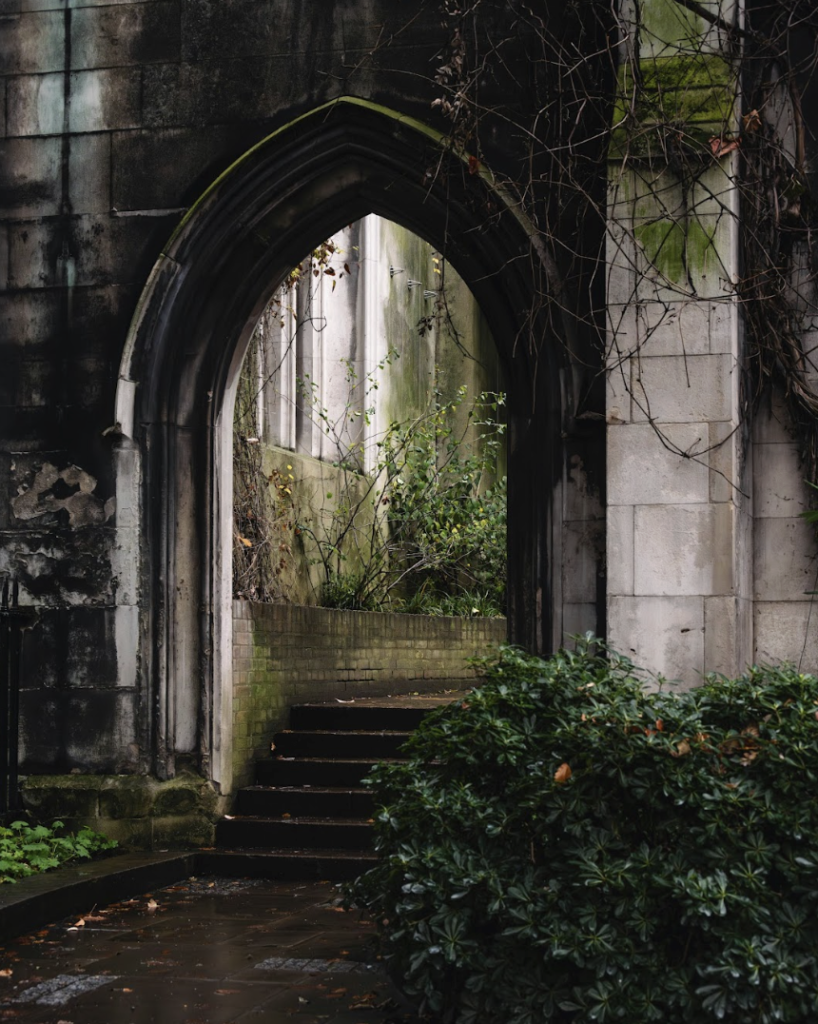
Photo by Laura Barry on Unsplash
Bombed in the Blitz and left as a ruin, it is now overtaken by palms, fig trees and climbing ivy that swallow the stone walls whole. A man-made structure slowly reclaimed by nature, a church dissolving back into greenery while glass office towers loom on all sides. People sit on the benches to enjoy their lunch. You can hear birds, the rustle of leaves, the faint clatter of the City beyond the walls. It’s surreal in the way only London can be: medieval ruin, tropical plants, finance bros eating Pret.
Postman’s Park
Simon Burchell, CC BY-SA 4.0
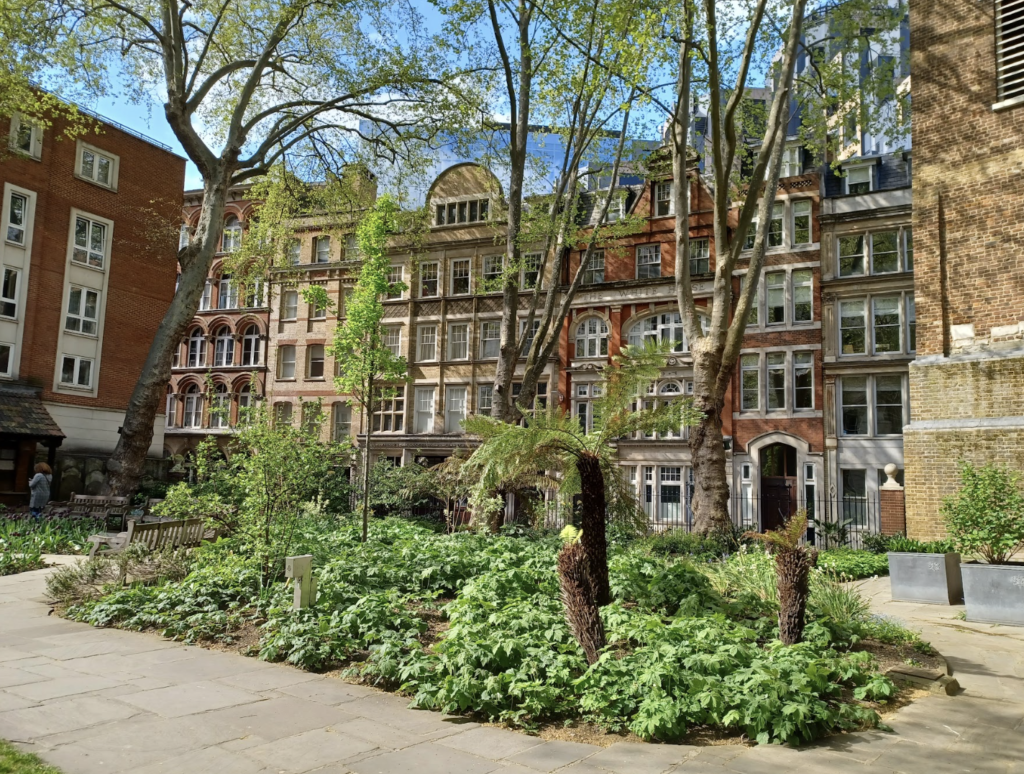
Tucked behind St Paul’s, this one is softer, sadder. The memorial wall – ceramic plaques telling the tales of ordinary people who died saving strangers – stops you in a way most London landmarks don’t. Office workers eat lunch, tourists read the stories out loud, someone is always sitting alone on a bench staring into space. If you’re burnt out, it’s the kind of place that can offer a pause.
Barbican Conservatory
Atreides83 CC BY 4.0
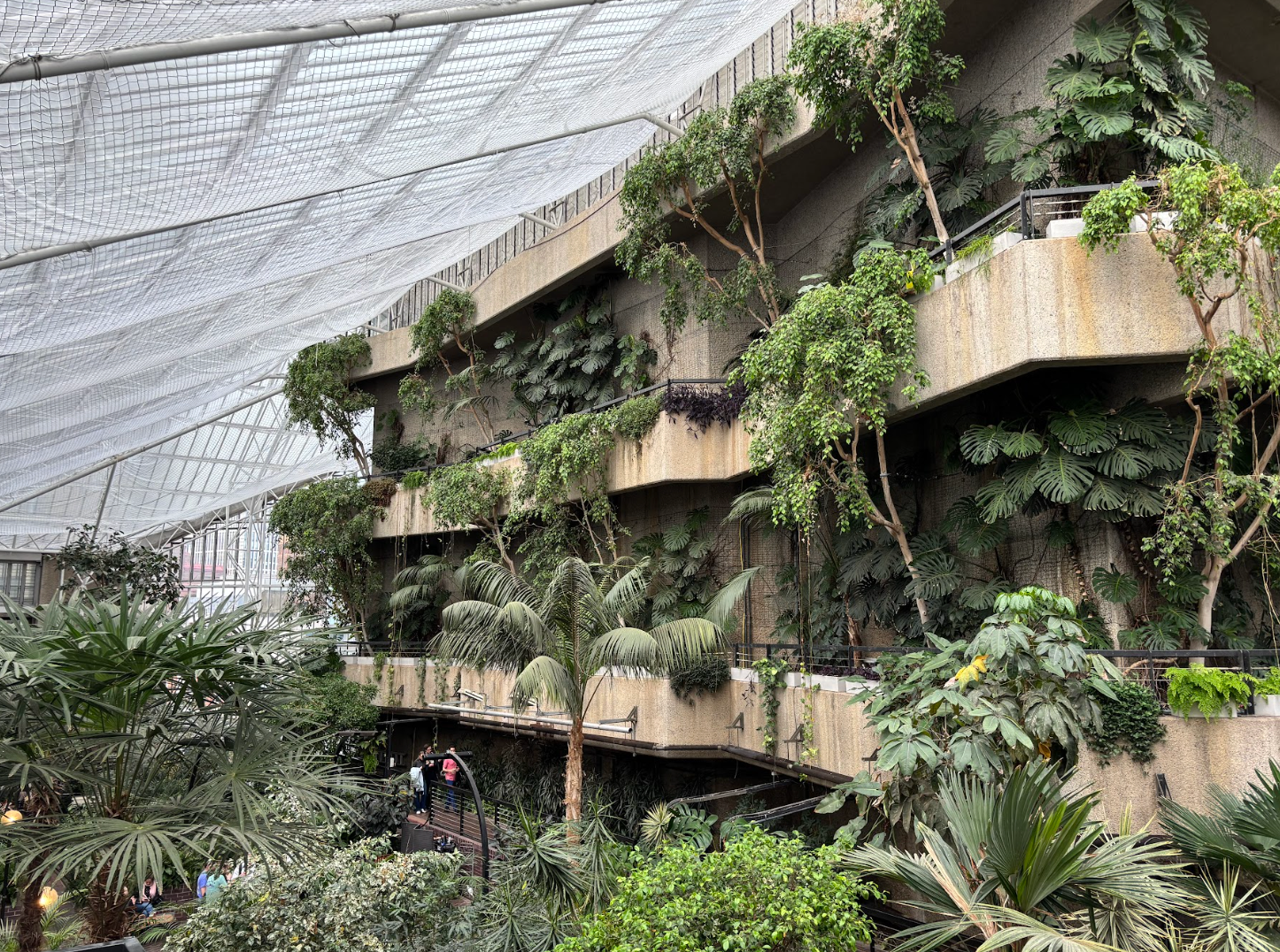
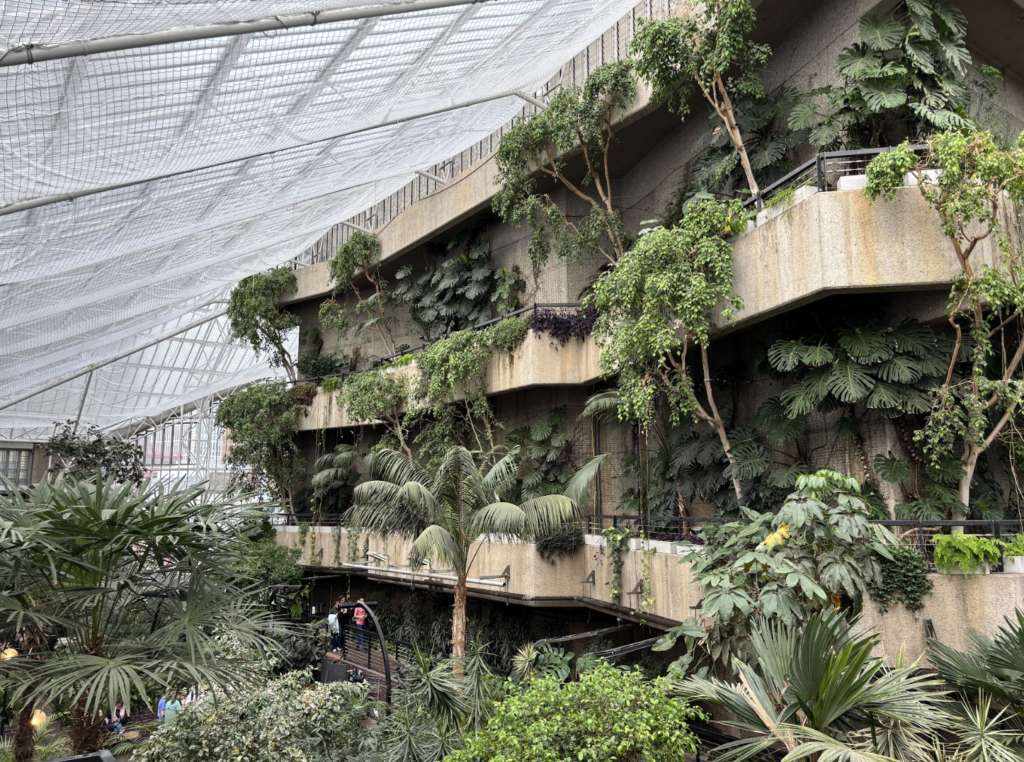
Hidden inside the concrete maze of the Barbican like a secret level, the conservatory is humid, slightly chaotic and full of plants that look too large to be indoors. You climb brutalist staircases expecting more grey corridors and suddenly you’re in a tropical greenhouse, surrounded by banana leaves and koi ponds while still wearing your coat because London weather has trained you not to trust warmth. It feels faintly unreal, like you’ve slipped into a different climate without leaving Zone 1.
Cleary Garden
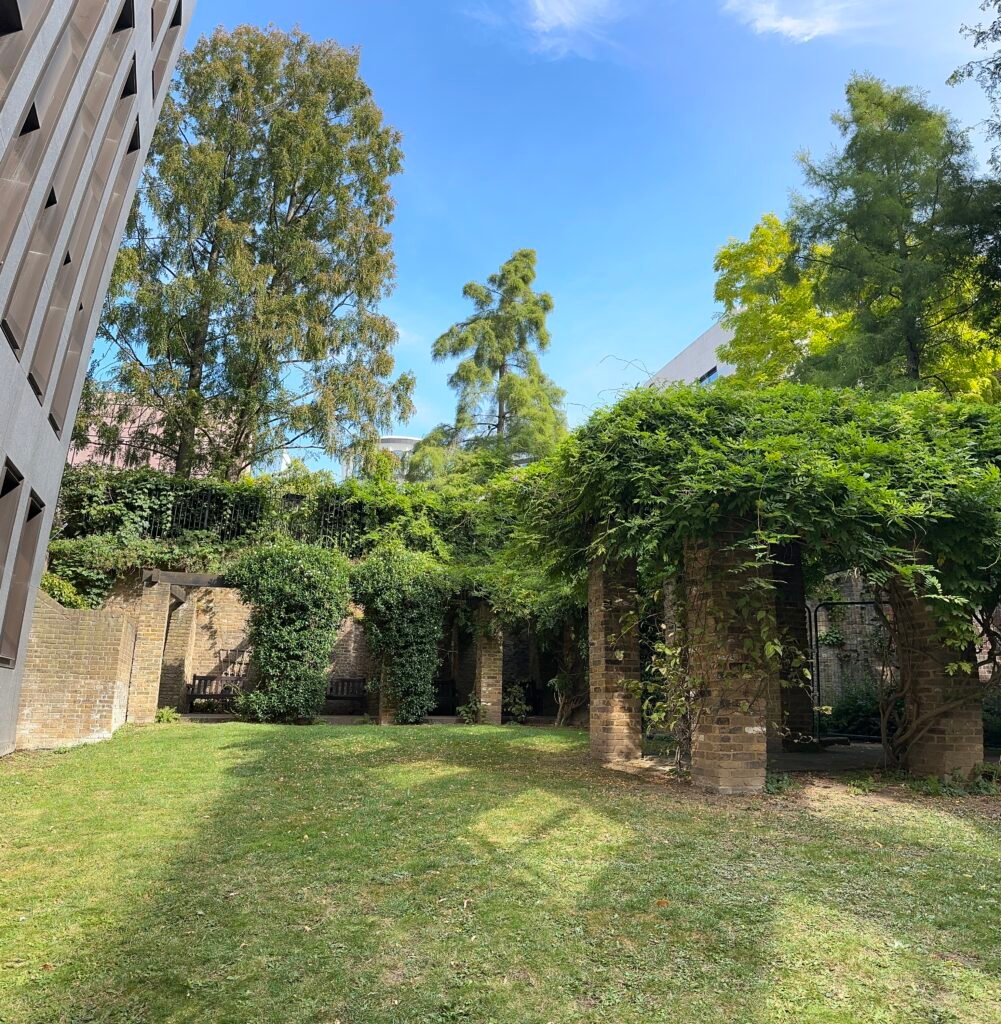
Small enough to miss if you blink, tucked beside Queen Victoria Street and surprisingly peaceful considering its proximity to the river traffic. It’s the kind of garden you stumble into accidentally while trying to shortcut somewhere else. People drift in with takeaway coffee, sit for ten minutes, then disappear again. Not particularly grand, just lovely. A reminder that even the most overbuilt parts of the City still contain pockets of softness.
Christchurch Greyfriars Garden
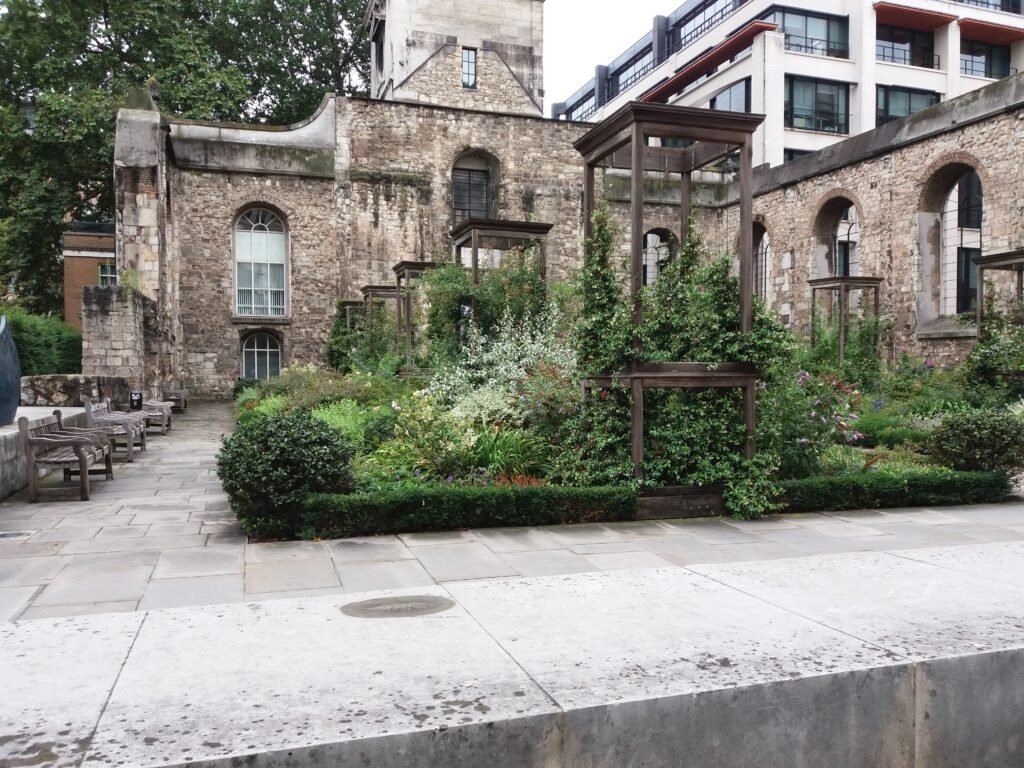

Another church lost to the Blitz, now reborn as a rose garden framed by the ghost of its tower. It feels more intimate than St Dunstan’s, with fewer tourists and more regulars. In summer the roses spill over the paths and the whole place smells faintly sweet – disorienting when grid-lock traffic is just a few streets away.
Phoenix Garden
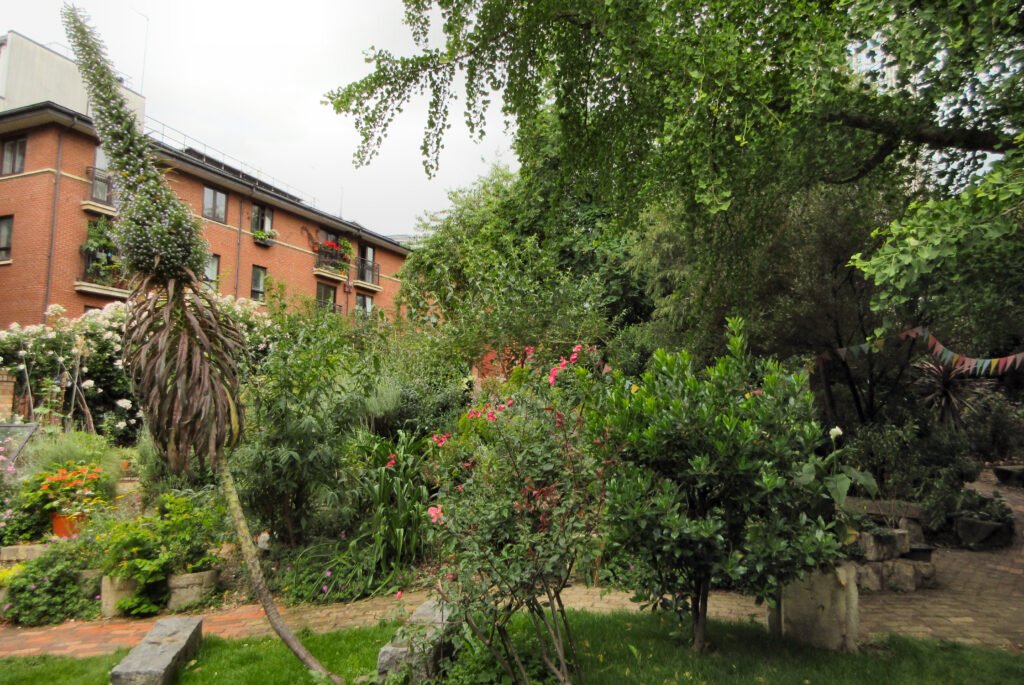
Established in 1984 and tucked behind the Phoenix Theatre off Shaftesbury Avenue, this community-run garden feels almost implausible given how busy the surrounding streets are. Enter through St Giles Passage and the noise drops off abruptly, replaced by dense planting, wooden benches and people lingering rather than rushing past. Run as a charity and open daily from dawn until dusk, it attracts a mix of theatre staff on breaks and the occasional tourist surprised to have found it at all. Less manicured than the City’s formal gardens, it feels lived-in. You can sit on benches, on the grass or standing swings. The garden exists in a vacuum from the sounds of the roaring City just one street over.
St Mary Aldermanbury Garden
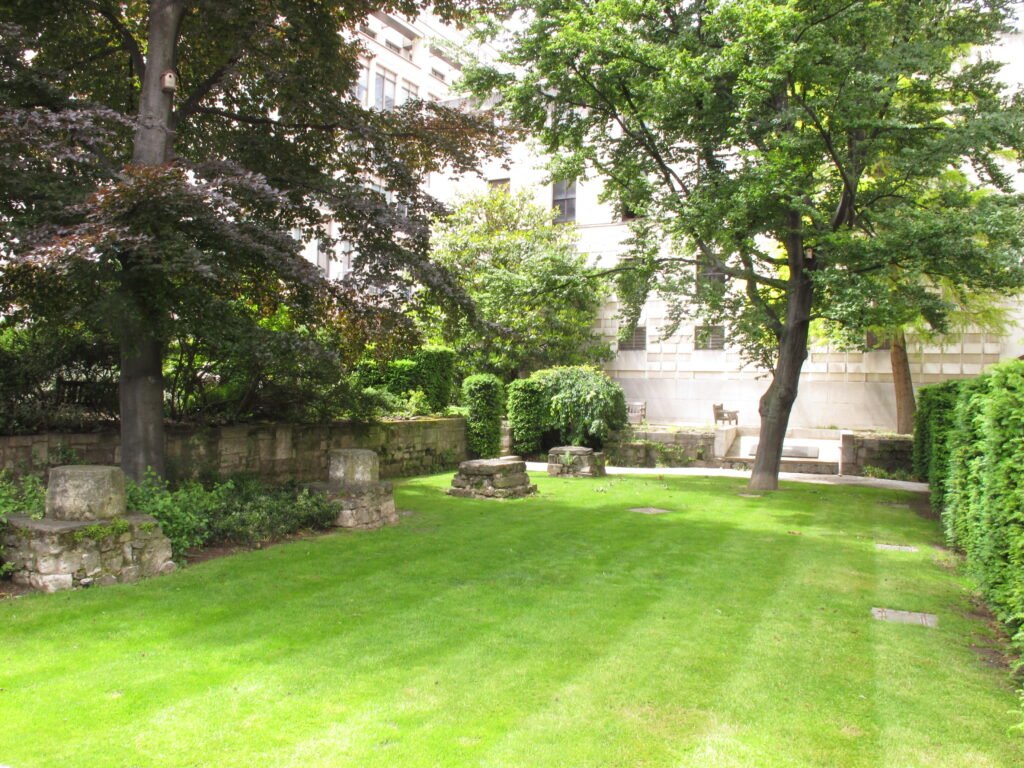
David Hawgood, CC BY-SA 2.0

A rectangular lawn sunk below street level on the site of a church destroyed in the Blitz, bordered by clipped hedges and benches bolted into the paving. Office blocks tower all around, providing a comforting sense of enclosure.
After surviving the Great Fire and being rebuilt by Sir Christopher Wren, the church was gutted again during the Blitz. In 1966, the remaining walls were dismantled and shipped to Fulton, Missouri, where it was rebuilt as a memorial to Churchill’s ‘Iron Curtain’ speech, leaving behind the footprint that became today’s garden.