
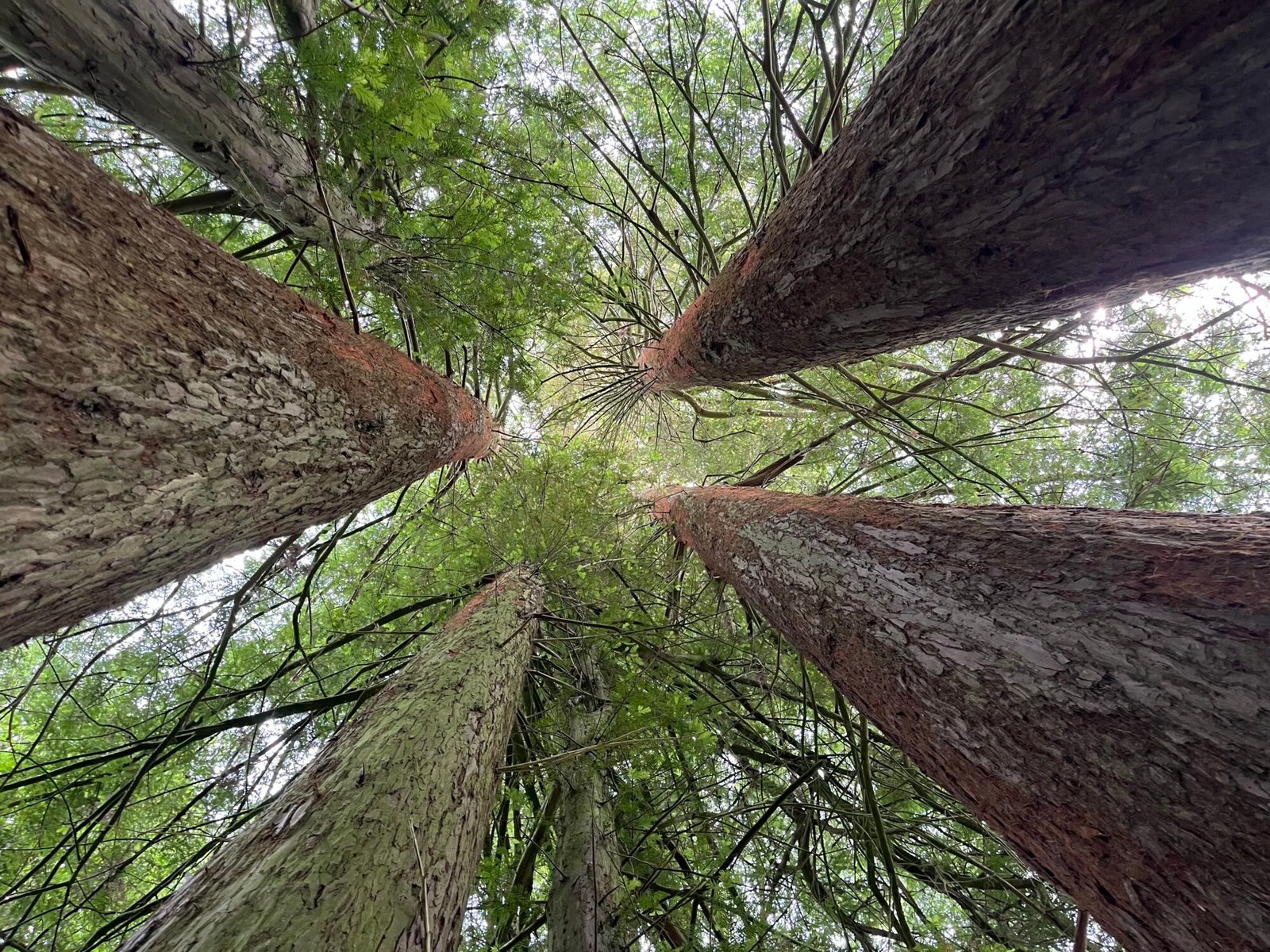
One year on from London Mayor Sadiq Khan’s updated plans to increase the city’s tree canopy cover by 10 per cent by 2050, we explore the importance of trees and where they’re placed.
“It’s crazy the difference a few trees can make to a street,” says Lira Valencia, a nature content creator who grew up in Croydon. “I mean the different shapes, the different colours, and just imagine all the wildlife it’s bringing.”
Valencia, a self-described tree enthusiast, advocates online for the protection of wildlife and the environment. But growing up in Croydon, South London, she says her surroundings were not always as green as she would have liked.
“I feel like in a space with trees I can just breathe.”
The borough sits roughly in the middle of London’s income deprivation scale, and the council has made efforts to improve its green spaces in recent years. In 2022 alone, they funded the planting of more than 500 trees across the area.
For Valencia, the impact has been transformative. “I feel like in a space with trees I can just breathe,” she explains.
From above, London looks impossibly green. Parks seemingly dominate the capital. Come summer, it’s as if everyone has taken up residence and permanently moved to Primrose Hill, Hampstead Heath, or Brockwell Park. Just the murmurings of a heat wave see Londoners flocking outside by the thousands.
The Wealth gap
Look closer and the pattern begins to fray. In some London areas, dense canopies shade entire streets, while in others, rows of concrete and asphalt stretch for miles with barely a tree in sight.
Despite being described as the world’s largest urban forest, tree cover in London is far from evenly distributed. Around 21 per cent of the capital’s land is covered by tree canopies, yet recent data from the London Assembly shows a gap of roughly 20 percentage points in canopy cover between the city’s wealthiest and poorest boroughs. If you have less money, you see fewer trees.
The disparity comes as Mayor Sadiq Khan has updated his commitment to increasing London’s tree canopy by 10 per cent by 2050 as part of wider efforts to improve air quality and tackle climate change. While the pledge promises a greener city overall, campaigners say it remains unclear how new trees will be distributed across boroughs, and whether the areas that need them most will benefit.
For residents in some of London’s most deprived boroughs, access to nature is rare – something that has to be sought out, rather than a part of daily life.
According to data from the Greater London Authority, neighbourhoods with the lowest incomes also tend to have the lowest levels of tree canopy cover. Newham, one of London’s most deprived boroughs, has among the lowest canopy coverage in the capital, with trees covering around 15.6 per cent of its land area.
In contrast, wealthier boroughs such as Camden and Richmond upon Thames boast 28 per cent and 27 per cent coverage, respectively – almost double the number of trees.
Environmental groups attribute the divide to decades of uneven urban development. Wealthier neighbourhoods often prioritised parks, garden squares and private green spaces, while densely built inner city areas favoured housing, roads and commercial development. Less room remained for trees.
Roddy Shaw, senior development manager at the charity Trees for Cities, says the result is a city where access to nature depends heavily on where people live.
“Across London, tree canopy cover and access to trees and green spaces is deeply unequal,” he says. “This means that disadvantaged communities are often left without the many benefits trees provide.”
Public Health
Those benefits go far beyond aesthetics. Trees help filter air pollution, provide shade during heatwaves, and support urban wildlife. They also help reduce the ‘urban heat island effect’, where cities trap hot air and become significantly warmer than surrounding areas.
This can have serious consequences for public health. Research from the Barcelona Institute for Global Health suggests increasing urban tree coverage by 30% could reduce heat-related deaths by nearly 40 per cent.
Ruth Fitzharris, a spokesperson for the clean air campaign group Mums for Lungs, says the lack of green space can significantly impact residents’ wellbeing.
“It affects quality of life,” she says. “People who live near a green space and a good park will be happier and healthier.”
Academic research supports this link. Puneet Dwivedi, a professor at Clemson University in South Carolina, studies the relationship between urban trees and mental health. He says the presence and condition of nearby trees can greatly influence our mood and mental health.
“Trees really matter when it comes to having less depression in adults,” he says. “If trees around you are dying, or there are none, depression in that household will be higher than in other areas where trees are healthy.”
Dr Jessica Fisher, a research fellow at the Durrell Institute of Conservation and Ecology, says the benefits of nature operate across multiple aspects of wellbeing.
“If trees around you are dying, or there are none, depression in that household will be higher than in other areas where trees are healthy.”
According to Fisher, access to green spaces affects physical health, psychological wellbeing, social connections and what she describes as a “spiritual” sense of connection with nature.
But access is key.
“You need around 120 minutes in green spaces per week, whether in one long visit or several shorter ones, to gain measurable health benefits,” she says.
For many residents of London’s most deprived boroughs, that level of access is not guaranteed.
Green gentrification
Attempts to improve green infrastructure carry their own challenges. Some researchers warn that adding parks, trees and green amenities to historically deprived areas can unintentionally lead to ‘green gentrification’.
The term describes a process where environmental improvements raise property values, attracting wealthier residents and developers, and pushing existing communities out of the neighbourhood.
“Green space is one of the major drivers of gentrification,” Fisher explains. “A lot of planning policy talks about levelling up deprived areas through accessible green spaces, but without better policies around ownership and regulation those improvements can end up widening inequalities rather than reducing them.”
For experts, the solution is not simply planting more trees, but ensuring they are planted where they are needed most.
While the mayor’s pledge aims to significantly expand London’s tree canopy over the coming decades, campaigners say the success of the plan will depend on whether it addresses the existing divide between boroughs.
For now, the city’s urban forest remains uneven, flourishing in some neighbourhoods while others continue to search for shade.
Image Credits:
Tree Image, Ben Gibbs, Flickr
Gherkin Image, Barny Z, Flikr
Tree Canopy, Electric Nude, Flickr