I have always hated hiking – an unfortunate personality trait while growing up in Shropshire.
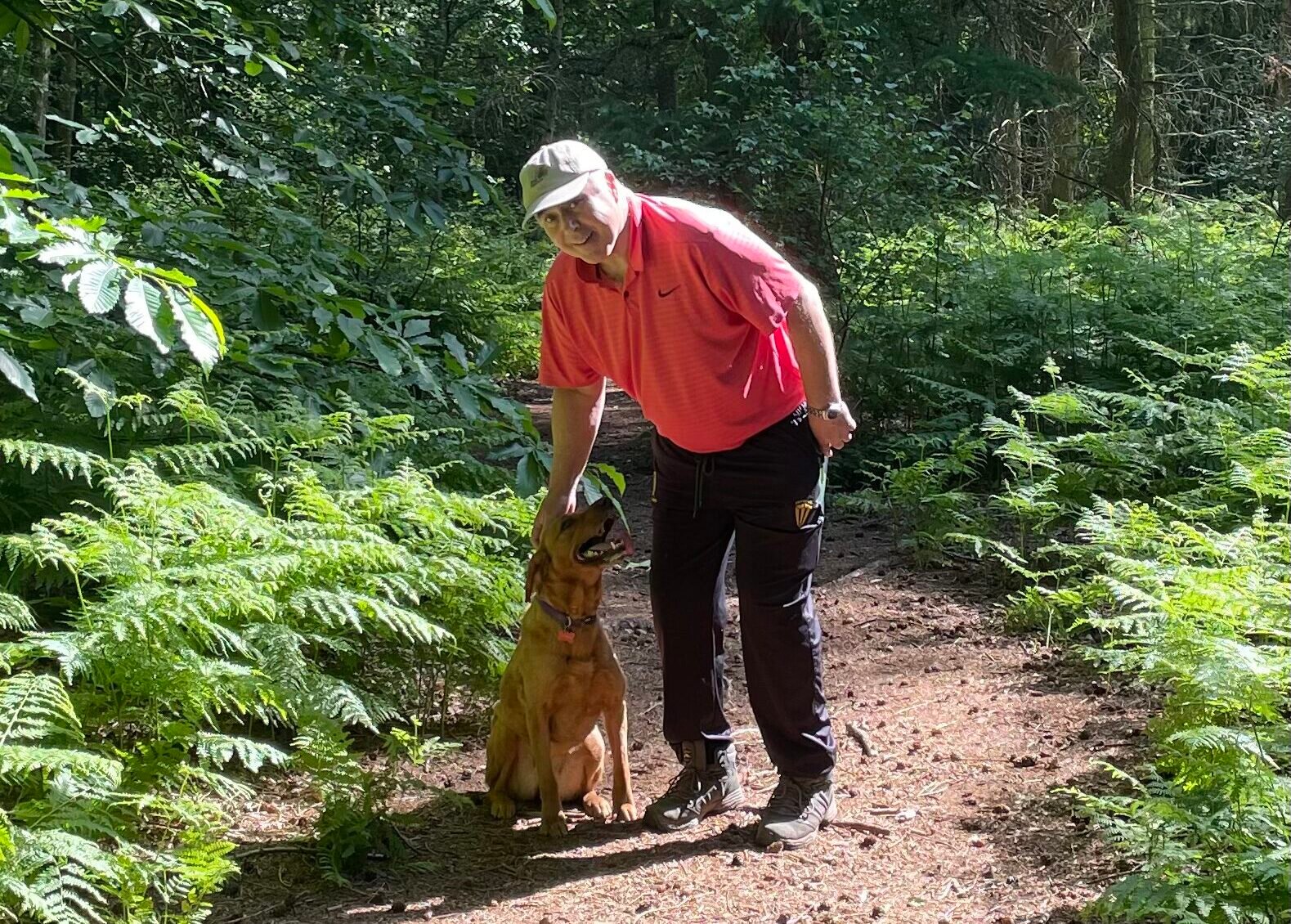
Shropshire is a county built around the assumption that everyone owns waterproofs and a pair of hiking boots. My childhood weekends were spent marching up the Shropshire Hills with our labradors Nelly and Ivy, while my parents, Stephen and Sue, admired the views. I would often consider the potential ramifications of simply sitting down and refusing to continue. They loved walking. Maps were unfolded. My mum’s sandwiches were packed with militant efficiency. My dad would make sure he had the bird app downloaded on his iPhone. There was always another hill.
I couldn’t understand why anyone would choose to climb a hill when perfectly good flat ground existed, or better yet, a sofa. My role on these trips was mostly to complain and occasionally ask, “Are we nearly there yet?” to which my dad would roll his eyes and keep going. This was a running joke in our family. My mum loved the outdoors, my dad loved the outdoors, and I loved being indoors with central heating and a wifi connection.
So when my dad died suddenly three years ago, I expected grief, phone calls, paperwork and flowers from neighbours.
I did not expect a specific instruction in his will: ‘Scatter my ashes at Chanctonbury Ring. Take the steep route.’
Even after dying, he had found a way to make me go on a walk. I put off doing it for a year.
Partly because spreading ashes feels like something you should only do once you understand what has happened – and I did not – but also because grief didn’t look how I expected. I imagined crying or dramatic melancholia. Instead, my body stopped cooperating.
“I was halfway up a chalky incline, carrying a backpack that contained my father. He was annoyingly heavy.”
I have a genetic condition called Ehlers-Danlos syndrome, which, previously, I had mostly managed. After my dad died it flared up worse than ever before. My joints hurt, I couldn’t keep food down, and I was eventually diagnosed with gastroparesis. For months my world shrank to a bed, a sofa and the short walk to the bathroom. I measured days by what I could eat and whether I could stand long enough to shower.
Two days before my dad died, he drove me to university. It was a completely ordinary day. We unloaded boxes and argued pointlessly about where things should go in the room. When he left, he said goodbye the way parents do when they think there will be another visit in a few weeks. I remember watching him walk back to his Honda and thinking, with mild embarrassment, that he had hovered slightly too long. I didn’t know I was watching the last normal moment of my life.
Afterwards, there were forms, phone calls, people speaking gently, and a strange expectation that I would resume my degree as though a large structural beam in my life hadn’t just been removed. At university, everyone else’s dad still existed in the background of their life. Mine didn’t.
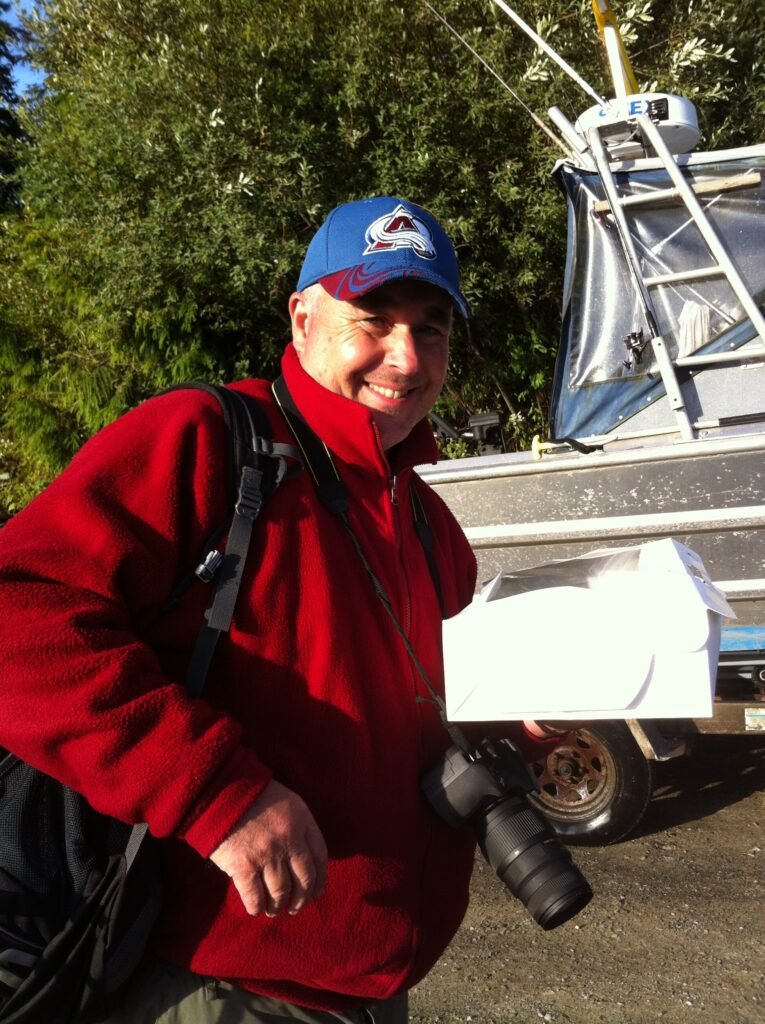
My dad loved Chanctonbury Ring, an ancient hill fort ringed by beech trees on the Sussex South Downs. According to the South Downs National Park, it has long been associated with stories of witches, ghosts and demons. Dad was from Sussex, and he had walked it often as a child. He used to say you could see the whole county stretching away from the summit. He loved anywhere that had a story, and any place that involved standing very still in uncomfortable weather waiting for a bird that probably wouldn’t appear. Holidays, for him, meant bird watching.
His Facebook became a running log of sightings. There was the occasional family event, or birthday, but mainly it was birds and bridges. He had a particular fondness for canal walks, and would post photos of plain bridges with all the severity of an American tourist documenting Tower Bridge for the first time. While recalling these things, I was counting steps between the bed and the kitchen, deciding if the trip was worth it.
“I had always thought the countryside was empty. That day it felt full.”
I imagined that dad would find his last request funny. Not cruel, just funny. He knew how much I disliked walking. He had listened to years of complaining and decided, apparently, that my final duty as his daughter would be one last climb.
So in June 2024, on a bright, clear day, my uncle drove my mum, my aunt and myself to the bottom of Chanctonbury Ring with a backpack, a bottle of water and my dad in a box. All of us, bar dad, prepared ourselves mentally for a three mile trek.
The car park was fuller than I’d expected. Dog walkers, runners, people carrying coffees in reusable cups. I briefly considered whether anyone would notice if I scattered him discreetly somewhere closer to the bottom, but he had been very specific – for the first time in months, I found myself unwilling to negotiate with him.
Within minutes I was out of breath.
For most of the previous year my world had shrunk to the distance between my bed and the kitchen. Now I was halfway up a chalky incline, carrying a backpack that contained my father. He was annoyingly heavy.
About a third of the way up I realised something strange: I was talking to him.
“This is ridiculous.”
“You would have liked this view.”
“This is very steep.”
“You knew this was steep.”
For months after he died I struggled with the fact that there was nowhere to direct ordinary thoughts anymore. The small things had nowhere to go. I would see something mildly interesting and still instinctively think to tell him. Halfway up the hill I understood I still could; the conversation just looked different now.
“Grief, especially when you are young, is oddly public.”
When we reached the top, we stood in the middle of the ring and opened the container.
For a moment nobody knew what to do. There is no socially agreed choreography for this. Eventually I held it, said something I cannot now remember, and tipped the ashes into the air.
At that exact moment the wind changed direction and blew them straight back into my face.
There was a second of shock, followed immediately by my mum laughing, my aunt trying to apologise to me while also laughing, and me crying hard enough that I couldn’t tell whether it was grief or the fact my dad had, one final time, managed to annoy me. It was, undeniably, funny. He would have thought it was hilarious.
Afterwards we sat on the grass and opened a bottle of Roman Red wine he had bought my aunt about a decade earlier, which she had never drunk because it tasted terrible. It was still terrible. We drank it anyway.
Up there, for the first time since he died, I noticed the absence of pressure. There was no paperwork, no expectations to be coping correctly, no need to perform being alright for anyone else. Just the trees, and the people who had known him longest.
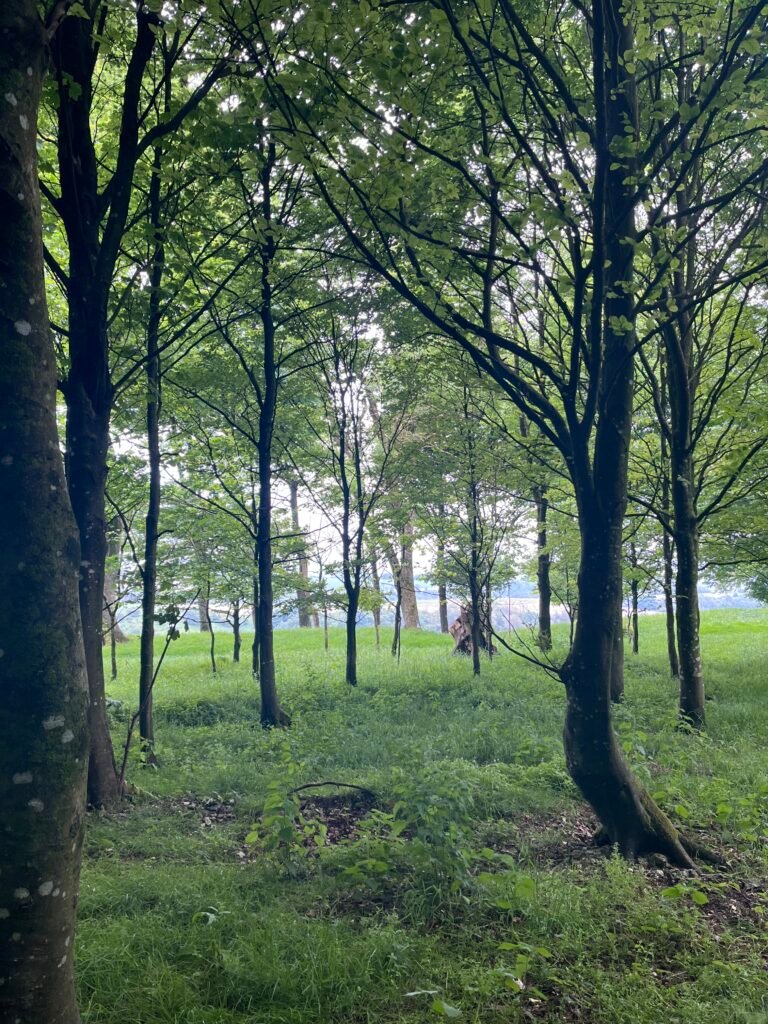
I had always thought the countryside was empty. That day it felt full.
Later, when I was back at university and life had resumed its normal speed, I started reading about grief because I wanted to understand why that day had felt different. The Wiltshire Wildlife Trust says, “Connectedness to nature can offer many benefits to people’s wellbeing and can aid healing for those experiencing grief.”
I don’t think the hill healed me. It didn’t make me less sad and it didn’t give me answers: what it gave me was space.
Grief, especially when you are young, is oddly public. People watch how you cope. You worry about whether you are doing it correctly, whether you have recovered quickly enough, whether you are making other people uncomfortable by still being affected. Up on the hill none of that existed. There was no performance required. I didn’t need to be an adult, or responsible, or reassuring. I could just be someone whose dad had died.
I still don’t like hiking. I probably never will. But I understand now why he did. Walking was where he thought. It was where he noticed things. It was where he was most himself. And, for a few hours on a windy hill, it was the closest I have come to spending time with him again.
I had gone there to leave him somewhere. Instead, it felt like I had found him a place, both geographically and in my heart.
As always Luce you make me laugh and cry and bring back lots of memories of your dad, thank you Xxx
Absolutely beautiful Lucy. Your dad would be so proud ❤️ he still comes up regularly in conversations between his cricket and golfing mates. We remember him fondly and as someone who made us laugh and wound us up in equal measure. RIP Doc
Lucy, thank you for sharing this story. You are a beautiful writer. You made me cry (again), smile at your dad’s influence when you scattered the ashes, and also reminisce. I love any moment I get to remember your dad, so thank you for sharing this with us all.