
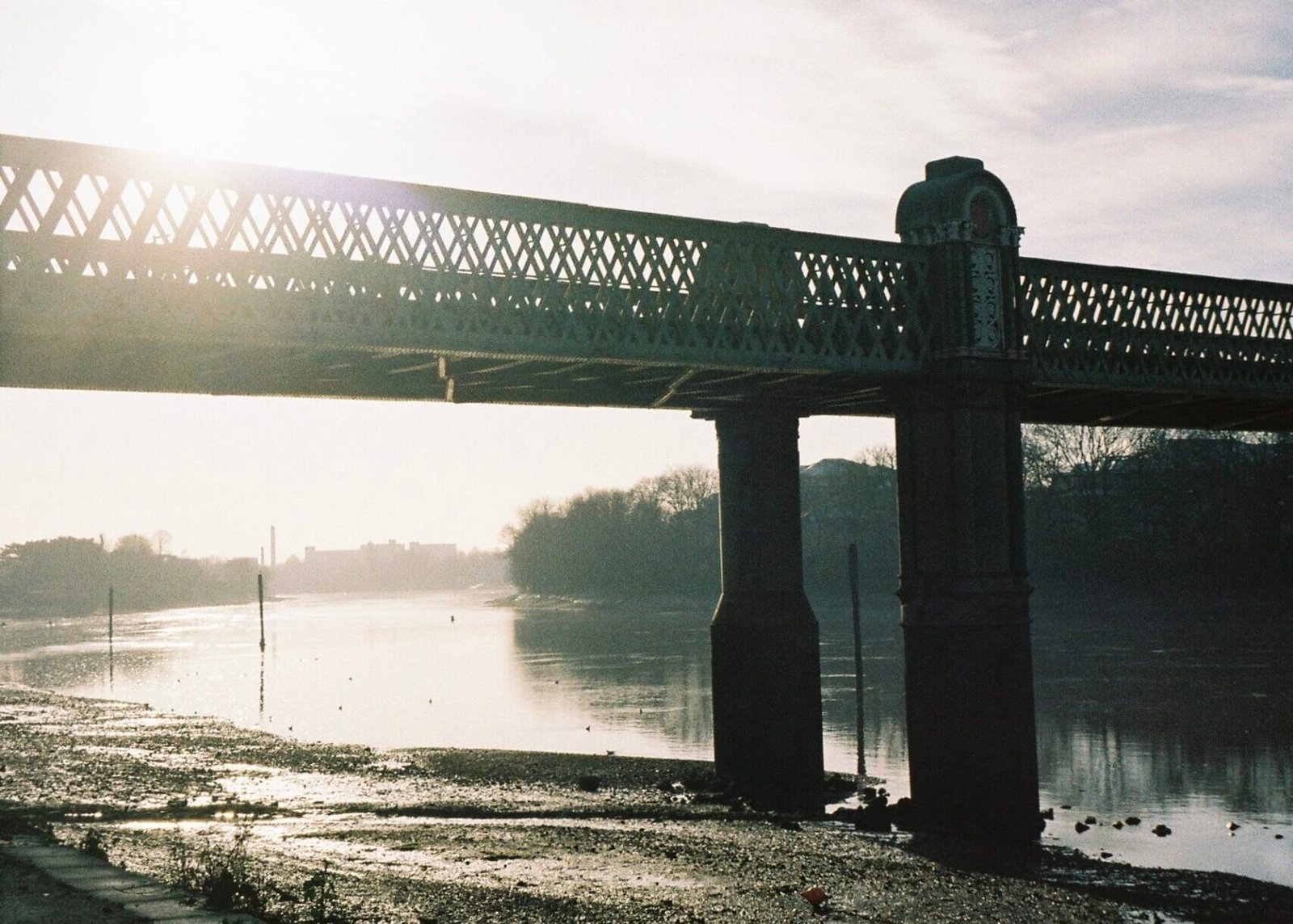
Every year, thousands of people scatter their loved ones’ ashes in the River Thames – but without official records of this, history is lost to the waters.
The average depth of the River Thames is 7.5 metres – the length of five queen size mattresses side by side. Of course, this is just an average. The real depth depends on where you are measuring and whether it’s high or low tide. The water level may vary, but the flow never stops, carrying with it the dead.
Every year, hundreds of thousands of people are cremated – nearly half a million in England, Wales, Isle of Man and Channel Islands in 2024. The Thames is not a new site for the scattering of ashes. Indeed, it has been the subject of an episode of quintessential British comedy series Only Fools and Horses; it’s also been mentioned in Call the Midwife. Just last year, journalist Amol Rajan spoke to the BBC about scattering his father’s ashes in the Thames.
So, how is it that no official record is kept for one of the capital’s most popular places to lay loved ones to rest?
Some wrongly presume the practice is illegal, but, in fact, only guidelines apply. For example, anything placed in the water must be water-soluble and biodegradable. Ashes and flower petals: yes. The container the ashes come in: no. Others participate in the practice but simply don’t declare it – they see no reason to.
Richard Martin, business owner of Scattering Ashes, is on a mission to change that. He’s set up a site for people to register where they have scattered ashes anywhere in the world.
Cremation is rising in popularity. Martin estimates that around 80 per cent of the roughly 450,000 people cremated each year will have their ashes scattered. In only one generation, he says, the details of where ashes have been placed will often be forgotten. The UK has kept vast genealogical records, including birth and death dates and final resting places, dating back to the middle ages. “Now, effectively, it’s stopped,” says Martin.
“The last official record we have is where someone is cremated,” he explains. “But that’s not really their story. The most important thing is where you’re laid to rest.” Martin argues that dignity and memory are the most important thing to families. Even without a headstone engraved with names and dates, the importance of place remains.
Marking the resting place of our dead is meaningful beyond the families and communities that knew them in life. These records tell future generations about our society, our attitudes towards life and death and identify us as people who mourned. This information is historically and anthropologically significant, even when the resting place is eternally flowing water.
As a Londoner, I’m never far from the body of water that snakes through the city and spills out to the North Sea. Its murky torrents run parallel to me when I’m running late to work in Vauxhall, I drive alongside it when I’m passing through Richmond to visit friends and it even flashes on my TV screen whenever the EastEnders’ theme tune plays.
The river has been through a lot. It was once a glorified sewer – in the summer of 1858 the smell became so awful some government offices on the riverbank were forced to close. This came to be known as “The Great Stink”. Then, in 1957, the Natural History Museum declared the river “biologically dead.”
But in 2021, the Zoological Society of London found promising signs of life for the first time in over 60 years. Between the banks, at various mattress-depths, over a hundred species of fish now swim where sewage once stagnated – even seahorses and small sharks have returned. “[The river] sustains a heck of a lot of life”, says Martin.
“Thames Water do mess it up and you get a lot of urban run-off, which is problematic,” he adds, “but it’s a huge flow.”
Before pivoting to the funeral business, Martin worked for the Environment Agency for 25 years. His specialism was urban pollution – rivers and streams. He rattles off facts about the fine sedimentary rock beneath the South East of England, explaining how it gives the Thames its muddy colour. “That’s sediment, not pollution,” he says.
“It is important that people know they have choice in how they memorialise.”
Martin also speaks enthusiastically about death and what comes after it – physically, that is. Scattering Ashes was born out of a blog he started to help others after difficulties scattering his late father’s ashes.
“It was a bit of a car crash,” he recalls. “At the start, I was just writing about how you do it, where you do it, and who gives permission – football clubs, things like that, and then it progressed.”
Thames ash scattering is just one of the services he provides: “We’ve got biplanes, spitfires, fireworks, drones,” he says. His ash-scattering boat trips get thousands of enquiries per year, with 20 per cent of them based in London.
The boat trips offer access to the water, privacy and safety. It’s also more dignified, as there’s less mess. Martin says: “Don’t believe anything you see on the telly or the films when they scatter ashes because it’s not true – they normally just use a couple of handfuls and up you go. But you get three kilos back – that’s the size and weight of a sweetie jar from the old-school tuck shops.” A boat trip to the middle of the river and a biodegradable, water-soluble urn accommodate this.
Martin senses my surprise. “What are ashes?” he asks, his eyes glinting.
“When you take a body out of the cremator, you’ll pull out a relatively broken down skeleton. Obviously, you can’t fit a skeleton in a small container. The rib cage, the pelvis, the thigh bones and part of the skull are all still reasonably visible.” The remaining bone fragments are then mechanically reduced to ash.
For some, the motivation to scatter ashes in the Thames is entirely secular: “Take your old-school Londoner, or people who worked on the Thames,” says Martin. “People love scattering in the water here because it gives them a deeper connection to the place, the city.”
For some families, the pull of the river is inherited. Kelly Nahar scattered her father’s ashes in the Thames, just as he had done for his own parents. “We just wanted to stick with traditions. It meant the world to us to keep the tradition,” she says. They take meaning from the idea of “giving the borrowed body back to Mother Earth”. Nahar adds that “in water, the body travels and flows”.
That said, 60 per cent of Martin’s customers for river-based ash scattering are Hindus and Sikhs, for whom the role of the river is theologically significant.
Sonal Dave, a Hindu celebrant, explains the significance of ash scattering on the river for Hindus. She says: “It stems from a belief that when you scatter the ashes into running or flowing water, it helps the soul to release from the body and continue its onward journey – whether that’s onwards to Lord Brahma, which is the ultimate god, or through the cycle of rebirth.” Dave explains that good karma influences the circumstances of rebirth.
Will Waterhouse, 23, scattered both of his maternal grandparents together in the Thames two years ago. His grandfather was a Hindu and his grandmother was a Sikh. Waterhouse says: “The Thames is the most significant British thing that you could think of, really, when it comes to running water. When my grandad left India, he pretty much just wanted to be a British man.”
Like Amol Rajan’s father, choosing the Thames as a final resting place not only allowed the soul to flow on to its next stage, but it cemented their identities as Londoners.
Waterhouse reflects on the day: “When we did it, my mum took one and I took the other. We scattered them along the Thames and [their ashes] perfectly combined behind the boat. Although I don’t really believe in anything, it was just the right thing for us to do at that moment.”
For Dave, it is important that people know they have choice in how they memorialise. “In the UK, you have to register a birth, register a marriage, register a death, but everything after that is a choice,” she says.
Every year, thousands make that choice on the River Thames – ashes are released into its currents. Britain is embracing alternative ways of memorialising its dead, but many are leaving little trace. The Thames has quietly become an unofficial cemetery, bereft of headstones but still holding history in its waters.