
As Londoners struggle to find decent housing, the city’s insects face a crisis of their own. With natural habitats disappearing, bug hotels are meant to offer refuge, but without the right design, they may be doing more harm than good.
We all know house hunting in London is a demanding, infuriating and sometimes outright impossible task. The London housing crisis is worsening: rents in the UK have reached their highest point on record, driving many out of their homes, and there is no guarantee that homes are even suitable to live in. These problems are relatable, even for our city’s bugs.
During winter, when a bug’s survival depends on its success in finding shelter, looking for suitable accommodation is a daunting task.
Bugs are cold-blooded, meaning they need “a good sheltering habitat from cold temperatures”, explains Francisca Sconce, outreach officer at the Royal Entomological Society (RES). The annual Bugs Matter citizen science survey found that in the past five years, climate change, pesticide use and habitat loss have led UK insect populations to decline by 59 per cent.
“If you want a healthy ecosystem, you need to provide a habitat for those beneficial insects to nest.”
The issue is amplified in urban environments, according to Dr Konstantinos Tsiolis, a pollinator ecologist. Bugs nest in natural materials like “stems of hollow plants, rotten wood,” he explains – but in London and urban areas, “that natural habitat is not present. We try to clean everything.” This is the root of the issue, says Sarah Wood, a volunteer helping to care for St John’s Garden in Farringdon: “The tyranny of tidiness is what kills our wildlife.”
In such a concrete and bustling environment, insects have to turn to London’s bug hotels. Bug hotels, composed of layers of deadwood and terracotta pots, welcome general species like beetles, butterflies and ladybugs. Bee hotels, on the other hand, are designed specifically for solitary bees. Unlike the well-known honey bee, solitary bees don’t live in colonies and thus have to find their own nesting place. Making up over 90 per cent of bee species, a suitable bee hotel is often made of hollow bamboo shoots bunched together.
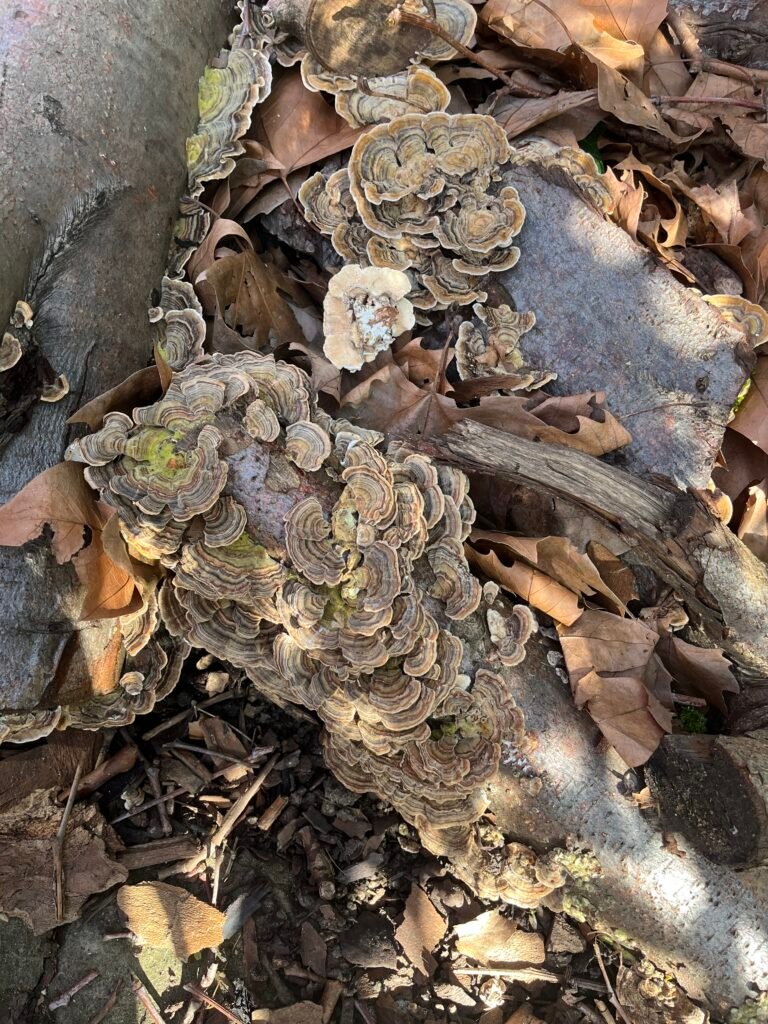
In collaboration with Dr Tsiolis, Sarah Wood is the leading volunteer restoring natural habitats for bugs in St John’s Garden. By drilling holes into a dead birch tree trunk for bees to nest in and watering deadwood to ensure it is moist enough for beetles, Wood has created various habitats to suit a diverse range of bugs. Crucially, based on the bee excrement that Wood and her fellow volunteers have found in the hotels, there’s evidence that bees are inhabiting the homes.
“Oftentimes, bug hotels aren’t designed by scientists but mass-manufactured by ‘companies that want to make profits.’”
For any type of beneficial bee hotel, sun exposure and proximity to flowers are key. The most scientifically informed hotel will be wasted if it isn’t placed in an unshaded, south-facing location near food sources for bugs. The idea of a bee struggling through the colder months in a poorly designed shelter is rather depressing. Fortunately, there are easy ways to remedy this, with volunteers around London working to build effective bug hotels based on insect research.
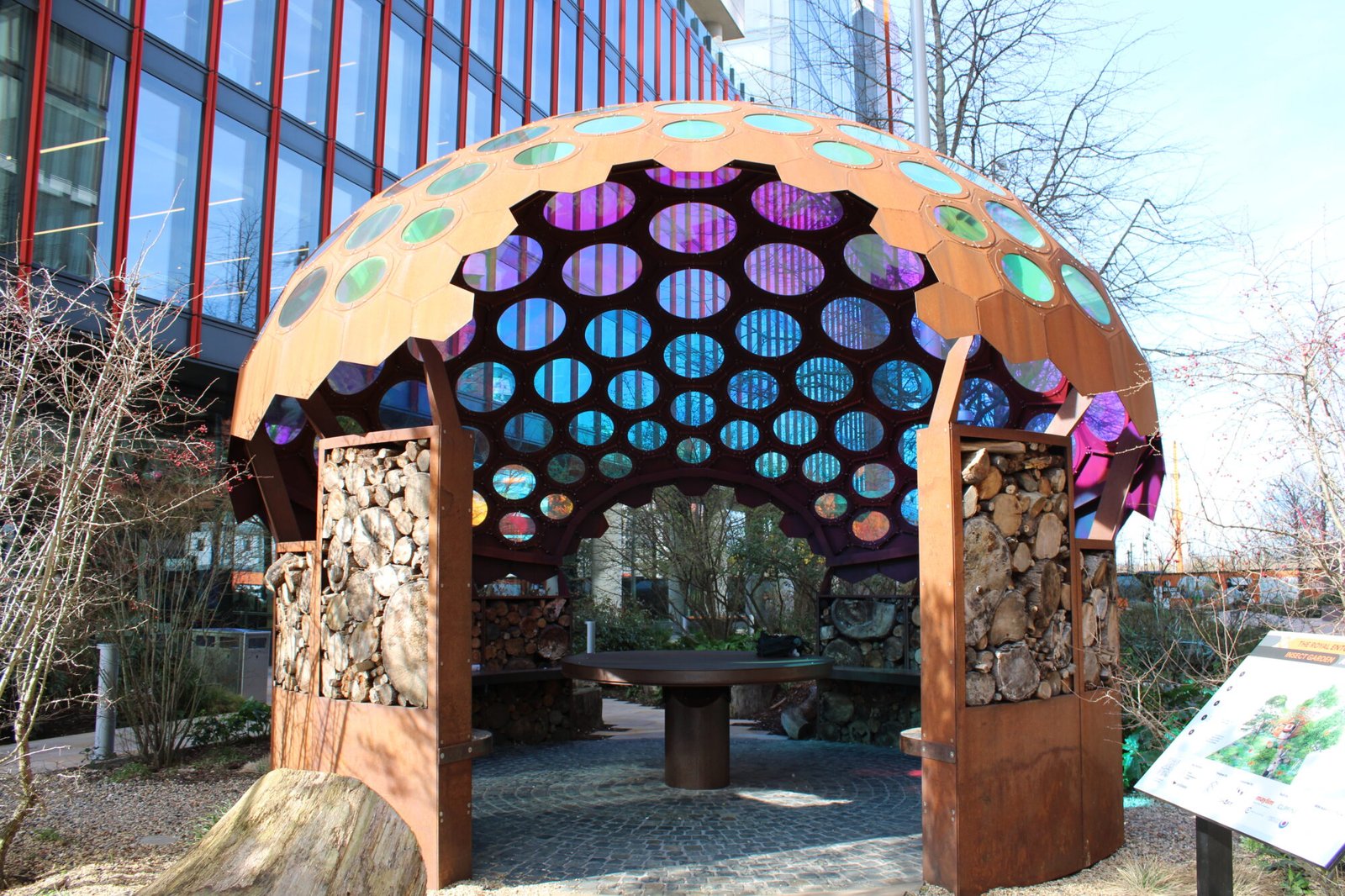
Across the city, a unique-looking bug hotel is also helping to promote an entomology-first approach to building these shelters. Five minutes from Westfield Stratford lies a huge, multicoloured ladybug-esque structure: the Royal Entomological Society (RES) insect garden.
It is south-facing, so it receives plenty of sunlight. When the sun shines down onto the dome in the centre of the garden, which protects walls made up of deadwood for beneficial bugs, the bug hotel is transformed into a space reminiscent of the inside of a kaleidoscope. The signage in front of the garden doubles as a bee hotel, and the entire garden is surrounded by a biodiverse mix of plants known to attract various bug species.
The RES insect garden may well be the Four Seasons of bug hotels. But not every bug hotel in London can match its standard.
Dr Tsiolis warns that many of London’s bee hotels are not suitable for the tiny dwellers. Oftentimes, bug hotels aren’t designed by scientists but mass-manufactured by “companies that want to make profits,” he explains.
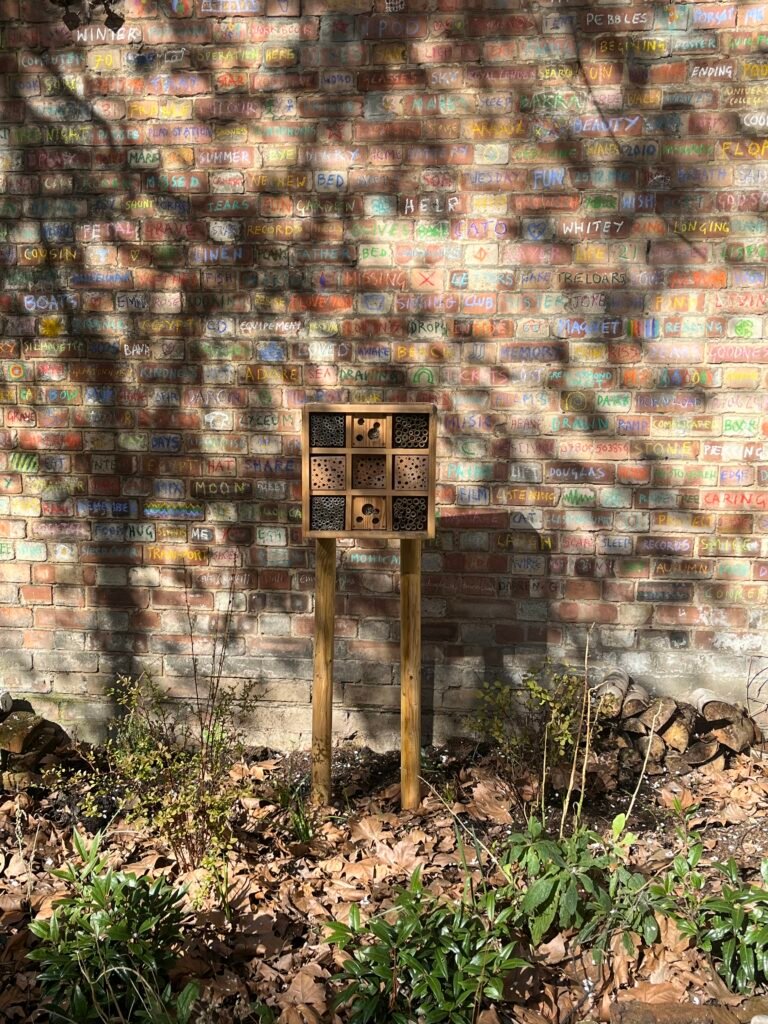
Dr Tsiolis has visited hundreds of parks and gardens in urban areas to examine them over the past three years. “The ones I’ve seen are useless. They are not helping anything,” he says. “They just look good in a space, but they don’t provide the habitat.”
For example, bees need to be selective with the shelters they choose. If they don’t, it could lead to their downfall: “The female needs the right space to be able to lay the right proportion of male and female eggs,” explains Dr Tsiolis, something she does by methodically laying the female eggs at the deepest end of the tube, and the male eggs nearest to the entrance.
Yet, the majority of the bee hotels Dr Tsiolis has encountered are not deep enough (under 15cm) to serve their purpose. “When you have shallow bee hotels,” he says, “you confuse the females. You don’t give them enough space, so they will lay only the male eggs, because they are in the shallowest end. And to grow a population – you can imagine the issues now – if you have too many males, it’s not beneficial.”
The tubes also can’t be too wide. Whilst us human Londoners are unlikely to complain about accessing a larger living space, bees would. It takes a lot of energy for female bees to collect materials and build a nest inside the cavities when they are an ideal width – between four to 10mm – so, when they are wider, she will have to use up far more energy than she can afford to waste. After all, she only has six weeks to mate, build a nest and lay eggs; she will die after her nesting cycle.
In these instances, Dr Tsiolis notes, for bees, building a nest is “simply not productive, because the purpose of the nest should be to be as efficient as possible.”
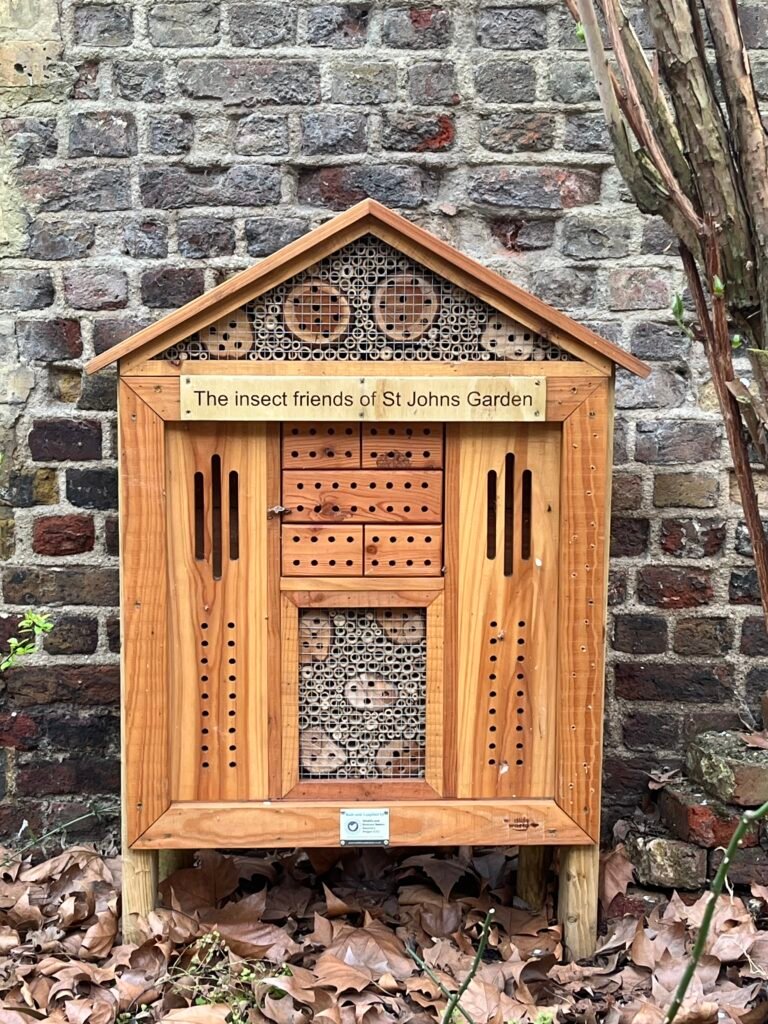
Building bug hotels is a two-way street for insects and Londoners. Dr Tsiolis puts it simply: “If you want a healthy ecosystem, you need to provide a habitat for those beneficial insects to nest.” When we help beneficial insects, we are also doing a favour to the plants they will pollinate and the organic matter they will break down – and to ourselves, as they keep mosquito populations under control.
Although there is a lot to consider when designing bug hotels, Sconce encourages people to simply ask for advice about designing bug hotels. “We get inquiries from the public going, ‘What can I do? What’s the best design of these? How can I make them the best?’” she explains. When this happens, she is happy to educate people and help to remove any intimidating barriers. For those of us lucky enough to have a garden in London, setting up a bug hotel and having a healthy ecosystem will mean your flowers and vegetables are less likely to get attacked by pests.
It’s just a matter of being informed and ensuring that your bug hotel is helping to tackle the London bug housing crisis, not contributing to it.