
As a member of Gen Z, I’ve spent my entire adult life with a mobile device in my pocket. How would I survive when it was taken away?
I wouldn’t consider myself overly reliant on technology. I mainly avoid using AI, and I make sure to read on the train and before going to bed. But these choices arise from a lingering suspicion that my dependence on tech, for even the most menial tasks, might be making me, well, stupider.
Studies have shown that a decrease in the sort of brain-training usually done by following a map or remembering directions is leading to an increase in rates of Alzheimer’s. Our memories are deteriorating at breakneck speed, and I, with my upbringing cushioned by technology, have never needed to remember anything, ever.
So, I decided to do something about it: for one week, I decided to ditch my phone.
In preparation, I made sure to print out all the necessary tickets and papers. I even dug out my bank card and tried to remember the pin (no Apple Pay!?). I gathered all the entertainment-replacements and navigation items I could possibly need, and turned my phone off for the week.
Disclaimer: my Whatsapp and laptop were still in use. Call that cheating, but I’m not sure I’d have survived without it. Not because I couldn’t have handled the lack of communication, but because my editors or co-writers might have pushed me in front of a bus if I’d gone completely MIA.
Day one:
On that first morning walk to the train station, I felt smug. Unlike all the commuters around me with their headphones on, I could hear birdsong above the rumble of North London traffic.
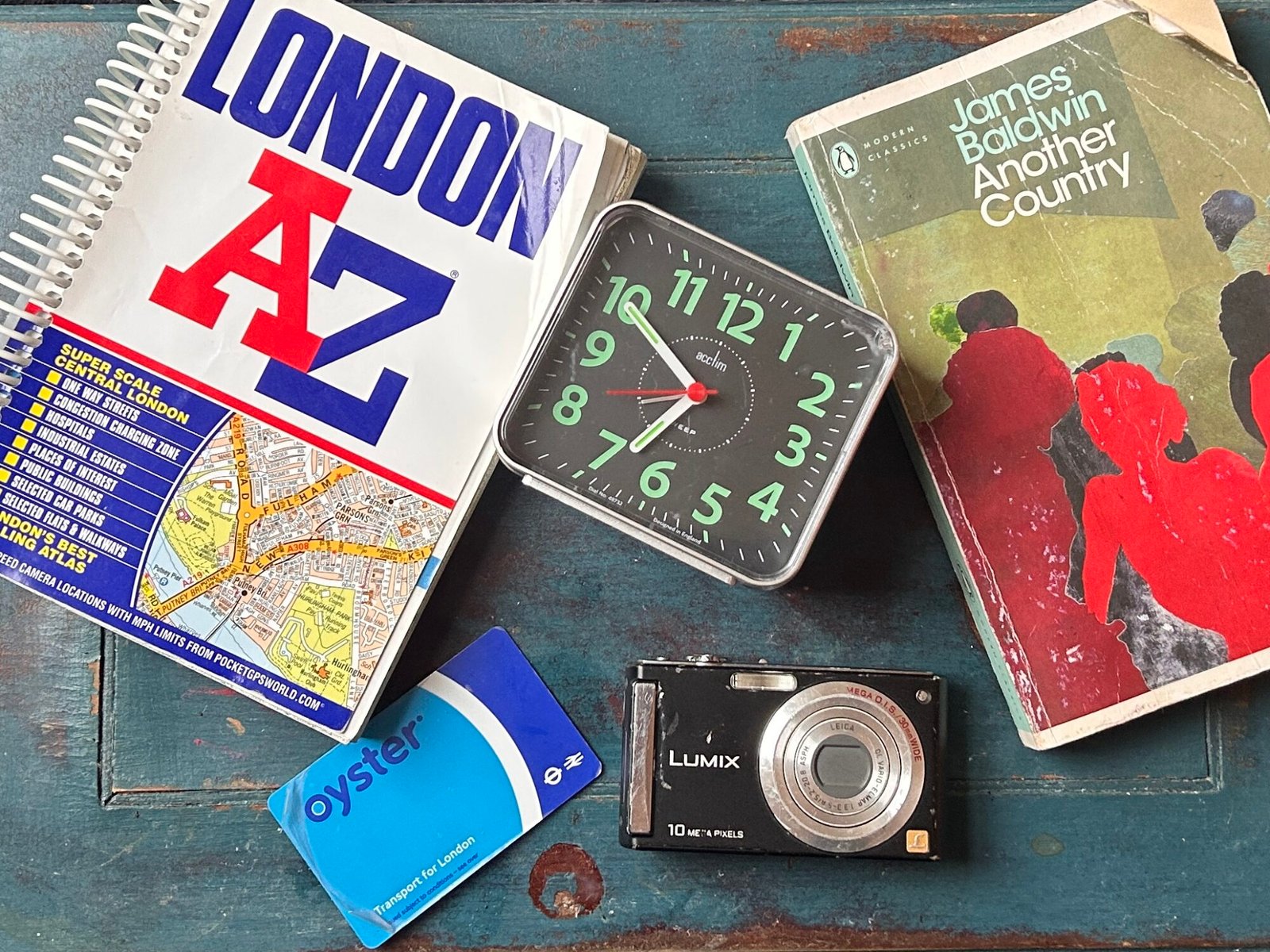
Admittedly, the state of my bag did kill the serene vibe: alongside the usual trappings of my daily life, it was stuffed with analogue alternatives to my phone: a camera, a book, a notebook, an A-Z map, a change-filled wallet and a newspaper; the extra weight was enough to tear a shoulder ligament.
The day went pretty smoothly. Other than having to use my co-interviewer’s phone to record a call, were no major hiccups.
But when I got back to my flat, the evening felt unnervingly empty. With no way to check when my housemate would be home, no radio, and my record player out of action, I decided to go for a run to pass the time.
It was refreshing to run without broadcasting my time on Strava. I realised how much of my life I instinctively track: my stepcount, my books on Goodreads, my films on Letterboxd. I wondered if I’d feel more liberated without everyone always knowing what I’m up to.
That evening, I went to set up my new alarm clock, but fell at the first hurdle: ‘scan QR code for instructions’ – oh, the irony.
Day two:
Besides a hellish alarm clock wake-up, the day began without a hitch. I had planned everything in advance, so I could catch a train to Bath for the evening, phone and stress-free.
My serenity was squashed at the ticket gates when I discovered there was no way of showing my railcard without a phone.
Committed to engaging with the real world, I went to the ticket office for help. They were, no surprise, excruciatingly unhelpful, and passed me off to Trainline who said my only option was to buy a new ticket. Tempting, but no.
When I headed back to London that night, I missed the train by two minutes and had to wait in the station for an hour; alone, bored and without distractions.
When I did eventually make it home, it was 2am rather than 11:30pm.
Dragging my feet from the bus stop to the front door, I couldn’t help but begrudge my phoneless state. Living analogue takes away so many of the safety nets to which I’ve acclimated. I was really missing Instagram Reels.
Day three:
With four hour’s sleep under my belt, I set off on another train journey – this time to the Lake District. Having escaped railcard checks a second time, I settled into the five hour journey with a James Baldwin novel as my sole companion.
I arrived an hour late, and met my very disgruntled friend in the Penrith car park. He greeted me with a grumble, “Thank God I tracked your journey, otherwise I probably would have abandoned you.”
Day four:
I woke to the smell of fresh countryside manure at 7:30am, feeling spritely after gaining an hour of sleep I would normally have lost to Instagram reels.
I decided to go for a run, placing untested faith in my ability to find my way back home. I wondered, if I were to get lost, what would I do? Knock on a farm door? Roam until I find a friendly looking dog walker? Is this a concern that people have always had, or was being murdered just not as big a deal back then?
Day five:
My friends greeted me with the horrifying news that the US and Israel had launched air strikes on Iran. I bought a print newspaper – I love a Saturday supplement – but cute things like that feel a bit pointless when the news is so bad.
Ordinarily, I’d turn straight to the news websites, researching everything I could find on the subject. Instead, I turned on the news, sat and listened.
Day six:
After arriving back in London – the final entertainment-less journey of the week blessedly through – I got the underground home and soon found myself surrounded by a group of football fans.
Without my headphones for a barrier, I’d become much more attuned to other people’s conversations. It was all fun and games until they turned their attention to me. I had no defence from the bombardment of sexually explicit abuse. Without my headphones, I couldn’t block them out. While my experiment in ‘engaging with the real world’ had done wonders for my awareness and concentration, I was beginning to recognise that the ability to disengage and tune out was also something I’d taken for granted.
Day seven:
Wanting to end the week on a high, I followed my A-Z-planned route to the cinema. I was as thrilled as I was surprised to discover that I could do it by instinct. The week had proven that I had a better internal geography of London than I thought. Landmarks, road turnings, specific newsagents: these are all sign-posts we learn to ignore when Maps is our default.
At the cinema, I paid for a full-price ticket because the under 25 discount only works online.
Once I found my seat, I settled in to enjoy the experience, trailers and all. I didn’t feel the phantom vibration of messages arriving in my pocket, or the niggling feeling that I could be doing something more productive. I sat through the entirety of If I Had Legs I’d Kick You, never once mentally drifting from Rose Byrne’s two hour acid-trip.
Final thoughts?
After fifteen hours of train journeys, anyone would tire of their own company, but the quiet no longer felt so daunting. In fact, by the end of the week, the instinct to plug in my headphones every time I left the house had almost disappeared completely.
But the world isn’t really built for Luddites these days. I couldn’t transfer friends the money I owed them or even check my work rota, which were major inconveniences to me and those around me. Still, the small interactions I had with strangers reminded me of something easily forgotten: most people are kinder and more helpful than our phones give them credit for.