
In a quest for cost-effective refreshment, Scarlett Clarke goes foraging for nettle tea.
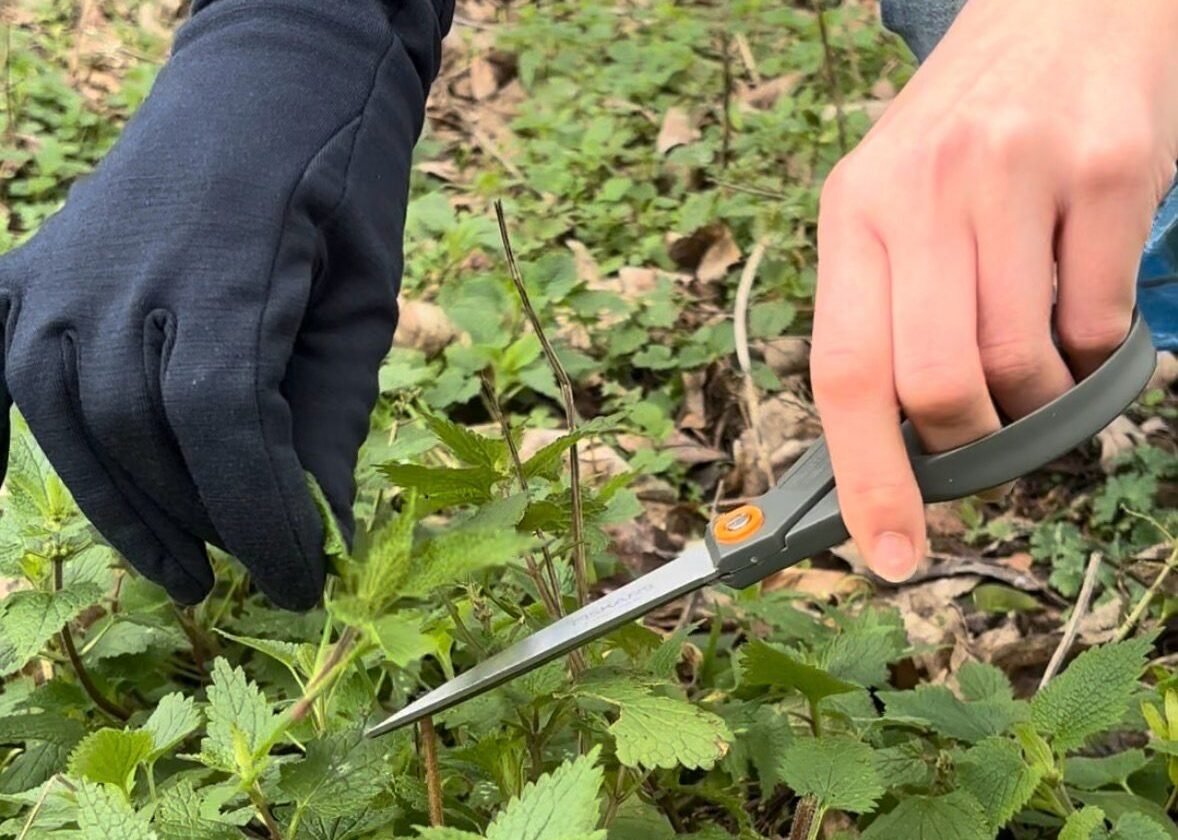
The source of many tears as a kid, stinging nettles taught me to wear longer socks and keep an eye out for dock leaves on my outdoor adventures. But today I am seeking them out – armed with two left handed gardening gloves (I was in a rush), kitchen scissors and my mate Emily.
We are foraging for stinging nettles in Bushy Park, Richmond, with the aim of making a nettle tea. The two of us are long-time herbal tea enthusiasts. At uni, ‘tea and chats’ became shorthand for spontaneous afternoons spent intellectualising situationships, cursing our dissertations and expressing gratitude for our friendship over steaming mugs of lemon and ginger tea.
This morning the sun is playing peak-a-boo but we are feeling pretty positive about our expedition. As we search we wonder what the nettles will taste like. Will it be a green tea vibe – leafy and earthy? Maybe more of a Jasmine – slightly sweeter?
“If you can boil pasta, you can brew nettle tea.”
We are far from the first to forage for nettles. The plant’s medicinal qualities have been written about as early as the Roman and Saxon times. For thousands of years they have also been used as a source of food and fibre. Nettles, outside of their career of making kids cry, are also superfoods. Their stingers – the hairs on the stem and underside of the leaves which can pierce skin – are adaptations by the plant to deter herbivores from eating them.
Bushy Park is a good shout for nettle-foraging because although the plants can be found everywhere in the UK, you don’t want to go foraging on road sides due to contamination and pollution. Also, you ideally want to find nettles that have grown slightly taller; the closer they are to the ground, the greater likelihood that you are foraging insects sloppy seconds.
It’s not long before we find exactly what we’re after: thick bunches of sprouting nettles. We wade through the shrubbery, gloved up, scissors in hand, and then set about cutting the top third of the nettles, collecting them in a sandwich bag.
It’s a good season for nettle foraging. They are best consumed from early spring until mid summer. By late summer – around June – the nettles start flowering. When this happens, not only will they taste bad, but the plant starts producing crystoliths which irritate the kidneys and have a laxative effect when consumed. Yikes.
“My fingers were crossed for leafy and earthy, but all I got was a mouthful of spud juice.”
But in March, we happily snip away. Back at home, we rinse the nettles and add two big handfuls to a pot of water. We bring the water to a boil and then turn the heat down, leaving it to simmer for ten minutes as advised by Google. If you can boil pasta, you can brew nettle tea.
Up until this point the nettles have been handled with care (and gloves). However, there will be no risk of getting stung after this stage because boiling water neutralises the stingers. Specifically, the sudden change in temperature causes the plant cells to burst. I feel triumphant as I watch my predator becoming prey.
After ten minutes, we strain the tea into some mugs. We raise the mugs to our lips, sip and… are incredibly disappointed.
As desperately as I want our foraged tea to be a success, I can’t ignore the fact that it smells like my kitchen when my dad is cooking a Sunday roast – the aroma is starchy and overboiled.
Nettle tea is apparently known for its earthy, grassy notes. It is also said to have slightly sweet undertones. I’m not buying it. To me it was heavy, sour, boiled vegetable sweat.
Another quick search tells us that ten minutes is the top end of how long to steep the nettles, five would have been enough. We are embarrassed and defeated.
Attempting to rescue our minging tea, we add a squeeze of lemon, but it only makes matters worse. Think excessive body spray in a PE locker room; it contributed to the dankness rather than masked it. Honey might have been a better idea, sourness being our main problem.
In more ways than one, nettle tea didn’t meet my expectations of a quirky green tea alternative – my fingers were crossed for leafy and earthy, but all I got was a mouthful of spud juice.
Did I have fun foraging? Yes. Was it satisfying to at long last conquer stinging nettles? Absolutely. Would I recommend it to a friend? Hesitantly, for the shits and gigs, and if you’ve got honey at home.
This won’t be the end of my foraging escapades. I’m optimistic that when London summer hits, a heavenly Aperol Spritz would go nicely with a foraged berry crumble.