
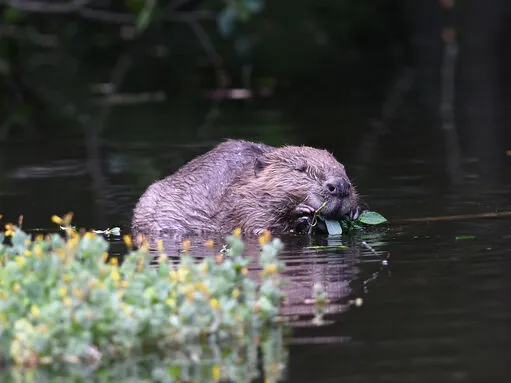
Dagenham park-goers will soon be picnicking with some of the UK’s rarest wildlife.
Nature is taking back its turf. The London Wildlife Trust has launched its ambitious “Rewilding East London” project, aiming to bring white storks and beavers back to local habitats, helping the city’s wildlife flourish once again.
These creatures are native to the British Isles, but emigrated to central and southern Europe in the 15th century due to habitat loss and hunting.
London’s ‘Rewilding’ project is taking place at Eastbrookend Country Park, located in Dagenham, and habitat preparations are underway with white storks expected to arrive by autumn 2026. Dubbed a ‘suitable’ site, this landscape includes mixed planted woodland and grassland as well as two main lakes to encourage vegetation growth. It is the wildlife equivalent of a VIP penthouse.
Around 20-30 white storks will be released into the capital and Eastbrookend Park will provide quality habitats, rich feeding grounds and a purpose-built aviary (a large enclosure for breeding birds). The chicks will eventually be released to help establish a new breeding population in late 2026.
The project, which is estimated to cost £500,000, is being delivered in partnership with London Wildlife Trust and the London Borough of Barking and Dagenham, along with support from the Mayor of London’s Green Roots Fund. Its intention is to increase biodiversity and restore habitats for local wildlife.
Mete Coban, Deputy Mayor for Environment and Energy said: “Access to nature is a social justice issue and we want to ensure all Londoners can experience the brilliant green spaces and wildlife in this city.”
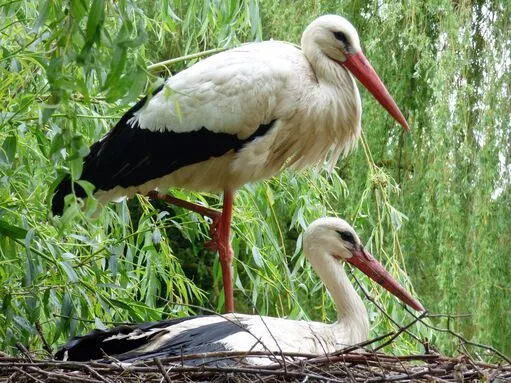
White storks aren’t your average birds. Distinguishable by their lanky legs, large beak and black detailing, they are elegant by design and can measure up to 1.25 metres tall. Sam Davenport, director of nature recovery at London Wildlife Trust, said: “The reintroduction of white storks and beavers is a catalyst for wider ecological restoration, helping to build a greener, more resilient London for generations to come.”
The beavers are expected to arrive in early 2027. Often called ‘ecosystem engineers’ because of their dam building abilities, beavers create habitats that benefit other species. They encourage the growth of plants, provide vital resources for fish and create natural perching sites for kingfishers.
There are already five beavers living at Paradise Fields in Ealing, the UK’s only publicly accessible urban beaver site. As part of the scheme, more will be released into a similar enclosure in East London.
Councillor Dominic Twomey, leader of Barking and Dagenham Council, said: “It’s about more than wildlife, it’s about giving families, schools and community groups the chance to be part of something inspiring and hopeful. I’m proud that we’re leading the way in London, showing how urban spaces can be places of restoration, learning and connection.”