
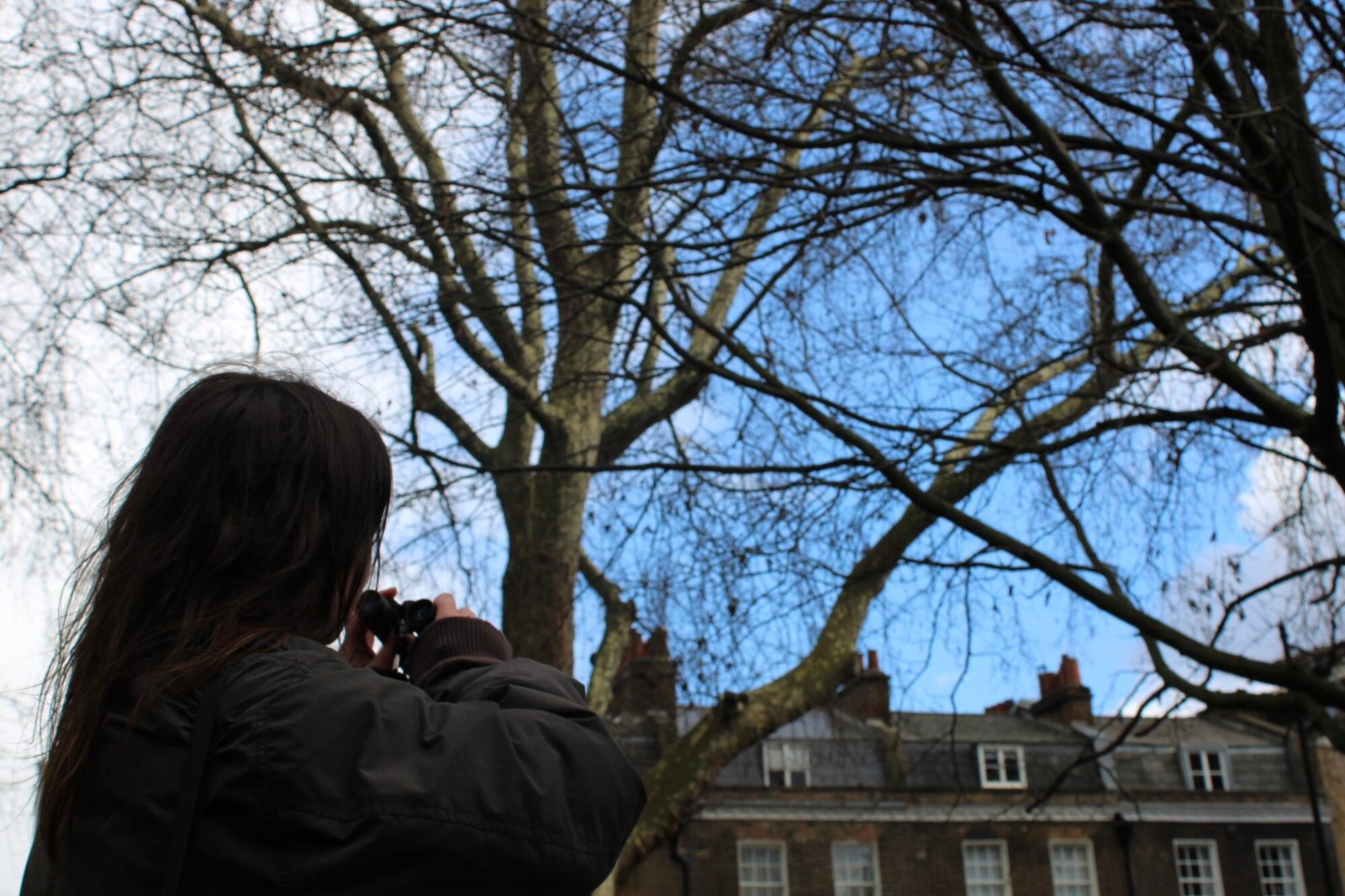
The hobby has found a new audience thanks to avian apps.
Birdwatching is not traditionally associated with Gen Z. It’s an activity that requires focus and patience. On paper, it doesn’t exactly align with a digital generation whose attention spans are eroded. Stereotypically, birdwatchers are thought to be quite a different crowd: older, retired, mostly white men who spend the little time they have left searching for rare birds rather than human connection.
But thanks to apps that gamify birdwatching, the hobby’s landscape is changing.
Younger generations may be attached to their phones, but they don’t want to be. Gen Z are increasingly using apps to wean offline, and some are for bird identification.
The recently released Birdex combines Pokémon Go and birdwatching by allowing users to compete with friends to spot and log the most birds. Since going live at the end of January, it has seen 200,000 logged sightings and over 18,000 downloads.
One of the app’s aims is to use gamification to pique the interest of people who have never tried birdwatching before, according to 24-year-old co-founder of Birdex Harry Scott.
“There’s a bit of a stigma around it — a lot of people see it as an old person’s hobby,” he says. “We’re really trying to change that and help people realise that it’s fun and rewarding.”
Scott explains that Birdex was designed to be used alongside a different birdwatching app which is also experiencing a surge in popularity: Cornell University’s app Merlin Bird ID, which Ariana Grande called “fabulous” on Amy Poehler’s podcast.
In 2025, the number of active users nearly doubled each month, according to Kathi Borgmann, communications officer at the Cornell Lab of Ornithology. Whilst Birdex turns birdwatching into a friendly competition, Merlin makes bird recognition accessible by letting users identify species with either a photograph or its sound-ID feature.
“We understand that we’re never going to get people completely off their phones, so I think it’s just about making that screen time more positive.”
“The apps have been massive in the rise in popularity of birdwatching,” says Kate McVay, a community and ecology advisor for the Royal Society for the Protection of Birds (RSPB). She attributes the uptake in birdwatching among young people to Merlin’s sound-ID feature, because it makes it “so easy to just whip out your phone, hold it up and know what’s singing to you”.
The app helps to break down many of the barriers that make the hobby difficult for amateurs, like 21-year-old Maria Ellam. Today, Ellam is a keen birdwatcher, but she only started birdwatching a year and a half ago. She credits Merlin for opening doors for her to discover and fall in love with the hobby.
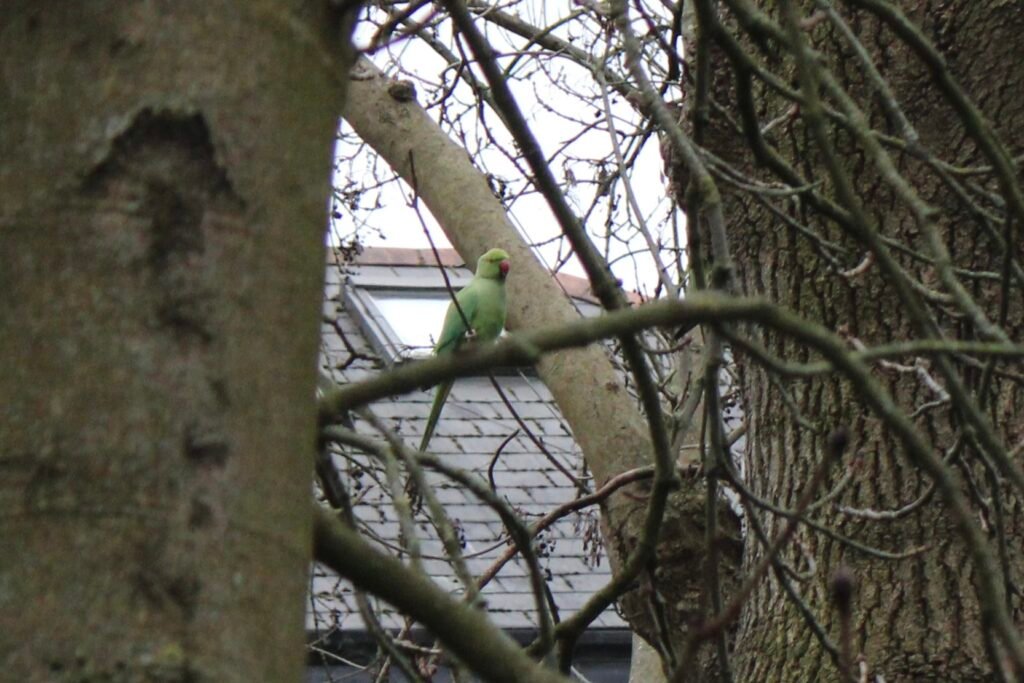
“When I was starting out, I relied a lot on the ‘identify by photo’ or ‘identify by sound’ aspect of it,” she says. But it’s also helped her hone her bird identification skills. “Merlin will give you a list of species that are likely to be in your area specifically,” Ellam explains. “And so over time, I started having to use the photo identification less, as I got more familiar with that list.”
Scott echoes her sentiment. “Before, it felt that you almost had to be an expert to be interested in that hobby,” says Scott. “I think a lot of the time, birdwatching can be focused on who can just spot the rarest things, which, for someone completely new, can feel a little bit intimidating.” Having been in this position himself, Scott wanted to ensure that Birdex was accessible.
Gamification is at the core of the app. When users log a specific bird sighting, they unlock the bird’s ‘card’ within Birdex, which they can level up every time they log another bird of the same species – à la Pokémon. There are also daily quests and weekly bird Bingos, which challenge users to go out and spot particular birds. This recipe for friendly competition aims to make seeing everyday birds more exciting, explains Scott, who notes: “We’ve just added a friends leaderboard within the app, which adds that sense of community.”
“In the wake of climate change, a lot of people are trying to spend more time in nature,” says McVay. At the same time, she explains that TikTok and Instagram Reels are taking a toll on our attention spans. These apps satisfy Gen Z’s urge to be outdoors and their need for constant stimulation.
Birdwatching apps hit this sweet spot, turning technology into a tool to learn about and engage with the natural world. We understand that we’re never going to get people completely off their phones,” says Scott. “So I think it’s just about making that screen time more positive.”
“To get involved at all is one step closer to saving nature, getting people to care and getting people more invested.”
Despite the overwhelming ratio of concrete to greenery, London is actually a great place to start birdwatching, according to Samuel Levy, youth engagement officer for the British Trust for Ornithology (BTO).
Of course, the city is home to an abundance of common garden birds, like robins, blue tits and wood pigeons. But many lesser-known birds make incredible journeys here. “One thing we don’t realise is that because of the River Thames and lots of different river systems around London, we’re on a lot of different migratory flyways as well,” says Levy. If you’re lucky, he estimates, you may be able to spot around 50 different species in a day at any of the Royal Parks.
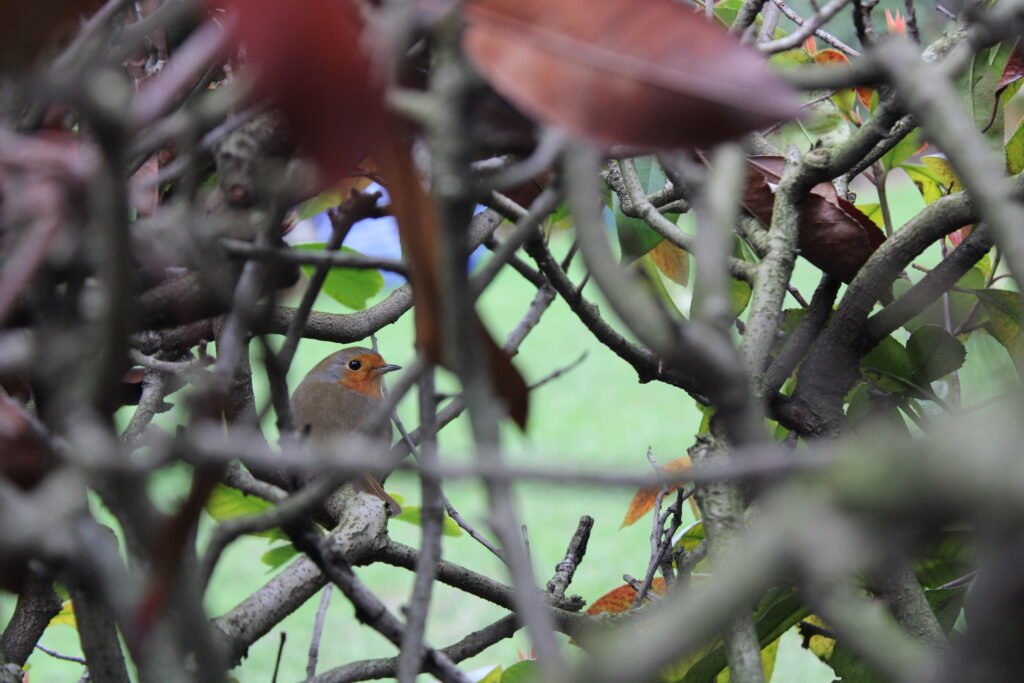
And once you start to notice our feathered friends, it’s hard to stop. “I think a lot of people tend to kind of block out bird song, unintentionally, as white noise,” explains Ellam. “And now I feel like in my day-to-day life, whenever a bird starts singing, it’s so much louder than it used to be.”
There are many benefits to birdwatching. A study from Baycrest Hospital in Toronto found that birdwatching is associated with better cognitive health. Long-time hobbyists have denser tissue in the regions of the brain involved in attention and perception. So, the fact that gamified apps make it easier for young people to birdwatch is undoubtedly positive, says McVay.
“Regardless of the means of getting involved in it, to get involved at all is one step closer to saving nature, getting people to care, and getting people more invested.”
Ten interesting birds you can spot in London:
- Peregrine falcon
- Mandarin duck
- Long-tailed tit
- Bohemian waxwing
- Great crested grebe
- Ring-necked parakeet
- Egyptian goose
- European goldfinch
- Tufted duck
- Great-spotted woodpecker