
Meet the mudlarkers who have a 60-year claim to London’s riverbanks
Since sociologist Ruth Glass coined the term in 1964, London has seen an onslaught of gentrification. Some would argue that Islington has fallen into the hands of the liberal elite, that Brixton is inundated with young professionals, that Hackney, teeming with creatives, is composed wholly of indie bands trapped in a spiral of unending disappointment – eternally hoping for a label contract they swear is just around the corner.
Mud, really, should be one of the only things that is impossible to gentrify. It is, quite literally, what makes up Planet Earth. In the same way that the air we breathe belongs to no one, the mud beneath our feet does too… right?
Wrong. Much of the ‘mud’ on the UK’s rivers and coastlines belongs to none other than the Crown. Yep, King Charles III could quite legitimately tell you to get off of his mud if the mood struck him. Thankfully, it seems he may have more pressing priorities at present.
London’s mud regulations are different. The Thames is controlled by the Port of London Authority (PLA), an organisation outside of government jurisdiction tasked with controlling entries into the Thames, managing boat traffic and supervising the riverbeds.
Whilst the PLA do not wield the royal gavel, there are still rules and restrictions that we all must abide by. Although most Londoners are disinterested in the squelchy, smelly riverbank, there are a select group of magpies-turned-connoisseurs who can’t wait to sink their feet in.
These are the mighty mudlarkers.
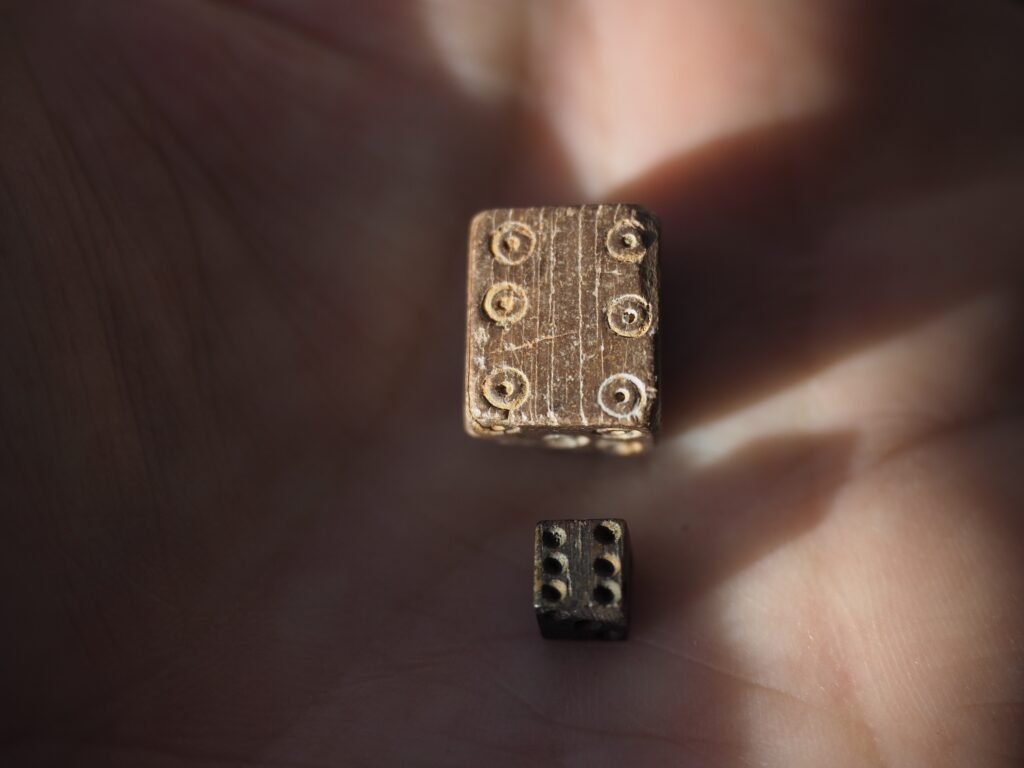
Mudlarks, historically, were the poor and destitute who would scan the shores for washed-up metal they could sell. That has changed over time. Now, hobbyists and historians can be seen trailing every inch of the riverbed in search of tokens, trinkets and treasure. They have found Tudor headdresses, Viking daggers and even 18th-century dentures.
The PLA even imposed controversial restrictions on mudlarks following an increased interest in the activity in 2020, spurred by Covid-19 lockdown measures and viral social media posts.
Licences have been required for the last ten years, but in 2024, the PLA constricted the length of the licence to one year and stopped auto renewals. Each year, a person has to prove that they’ve mudlarked for over four years, that they have reported finds to their local museum, and that they are contributing to ‘public understanding of the history of the Thames’.
“If I were to join the waitlist today, I wouldn’t be able to try my hand at mudlarking until 2066.“
Despite a record-high of over 10,000 people currently sitting on a waitlist, only 4,000 permits are available each year. If I were to join the waitlist today, I wouldn’t be able to try my hand at mudlarking until 2066 at the very earliest – that’s a 40-year wait time.
It’s not the most inclusive of policies.
Tom Chivers, a licensed Thames mudlark and writer who’s completing a doctorate on the subject, explains that regulation of mudlarking has a long history. “In the late 18th and 19th centuries, mudlarks were thought of as criminals, river thieves who stole goods from boats moored in the Pool of London” he says.
“In the early 1980s,” he continues, “the PLA introduced regulation to stop what they saw as environmental and archaeological damage to the foreshore, and mudlarks were required to report their finds to the Museum of London.

“In the last few years mudlarking has become more hierarchical,” Chivers says. “On the whole, mudlarks are a diverse, friendly, curious and collaborative community of history enthusiasts, but with the Society, standard permit holders, renewable permit holders and creative permit holders, there are now four tiers. There are also people who metal detect on the foreshore without a permit at all, which is illegal.”
By “the Society”, Chivers is referring to The Society of Mudlarks, an exclusive group of around 50 long-time mudlarkers who have special privileges. They retain their longstanding licenses and are allowed to dig deeper, around three feet, compared to the three inches permissible for standard permit holders.
Their group has attracted criticism. In June 2025, the London Centric, a burgeoning news Substack run by Jim Waterson, who previously worked for the Guardian, claimed that the mudlarking world was rife with “rivalry” and “bitter feuds”.
Mudlarks insist that’s not true.
Chivers’ experience has been nothing but good. “It’s a great community,” he explains. “When we all meet for exhibitions, for example, it’s just wonderful. It’s this gathering of people who normally spend their time alone on the foreshore all coming together.”
“It’s this gathering of people who normally spend their time alone on the foreshore all coming together.“
Lesley McDonnell, a London local who began mudlarking to escape the monotony of 2020’s national lockdown, sees it as not only a leisure activity, but a lifeline.
“It honestly saved my mental health,” she says. “I have made so many new friends and we regularly will mudlark together. I’ve done five exhibitions so far this year. I’ve learned so much about pottery, clay pipes and history. My knowledge now, compared to when I started, is phenomenal.
That society has been around a long time and is set in its ways a little, but … we’re all saving history. That’s what matters.”
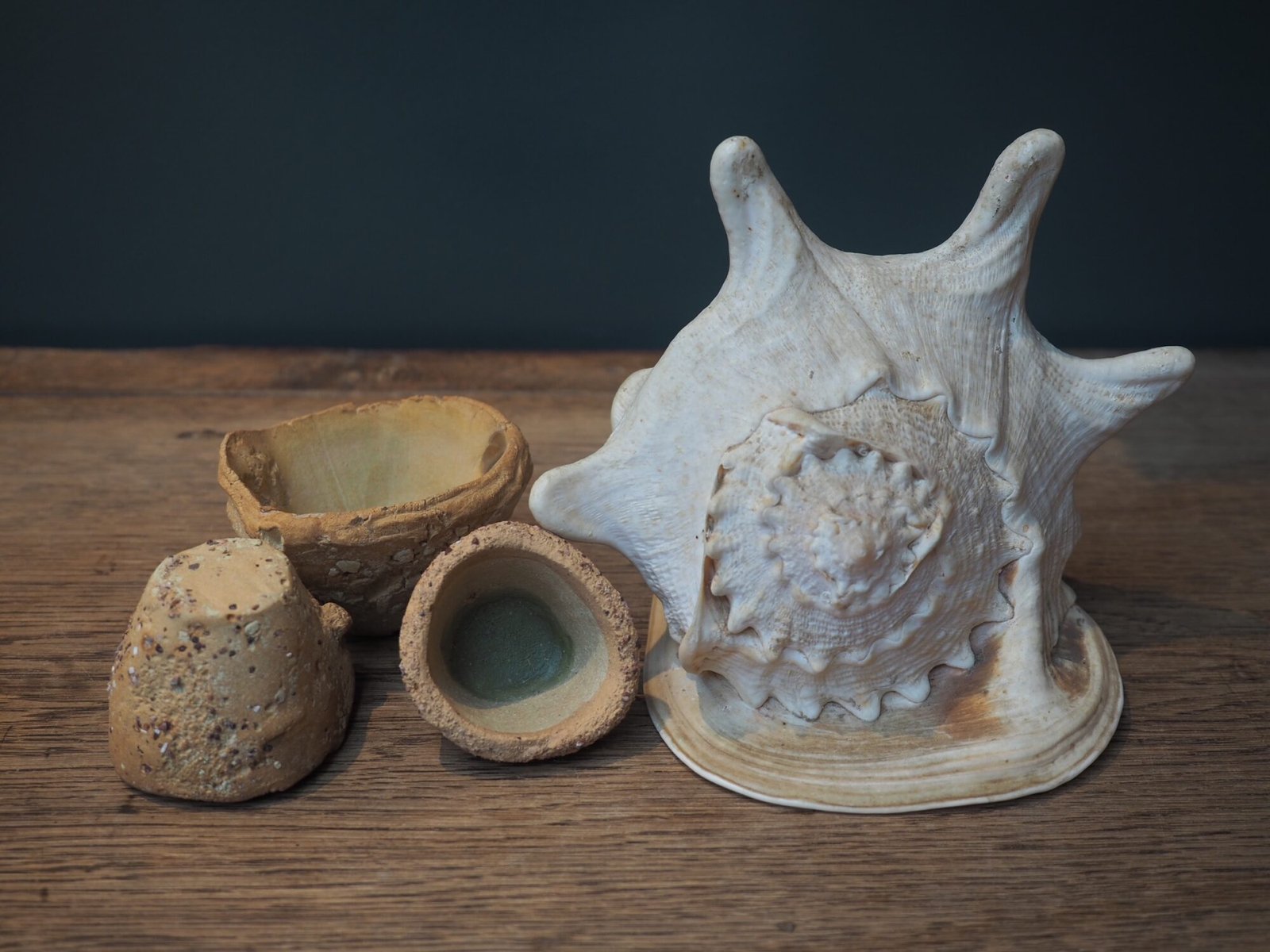
Header Image features pots made by Mark Sowdon.