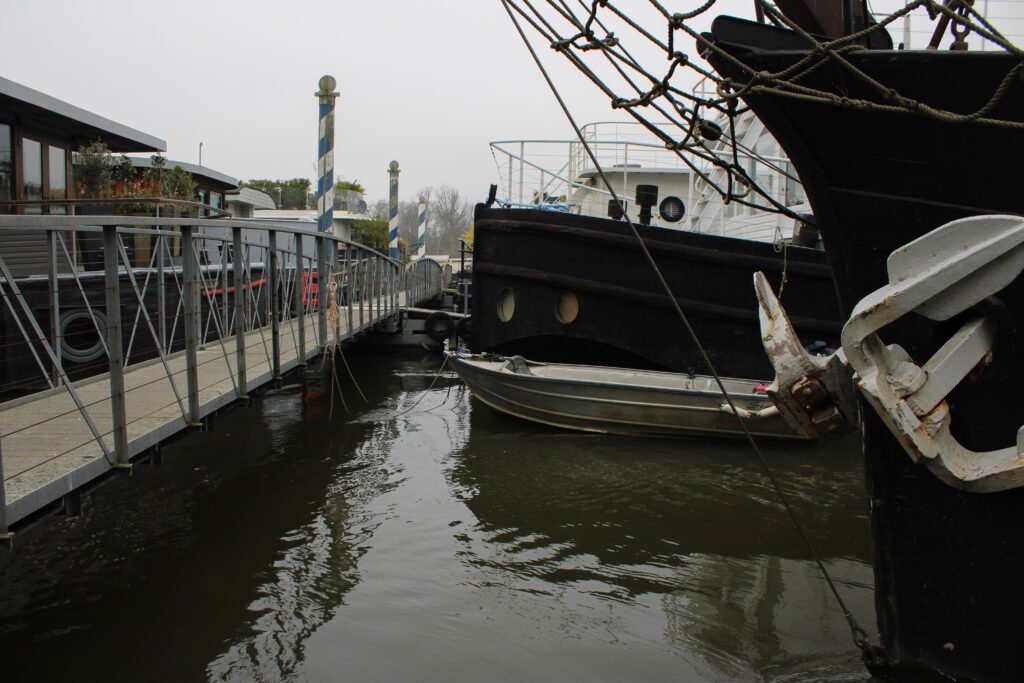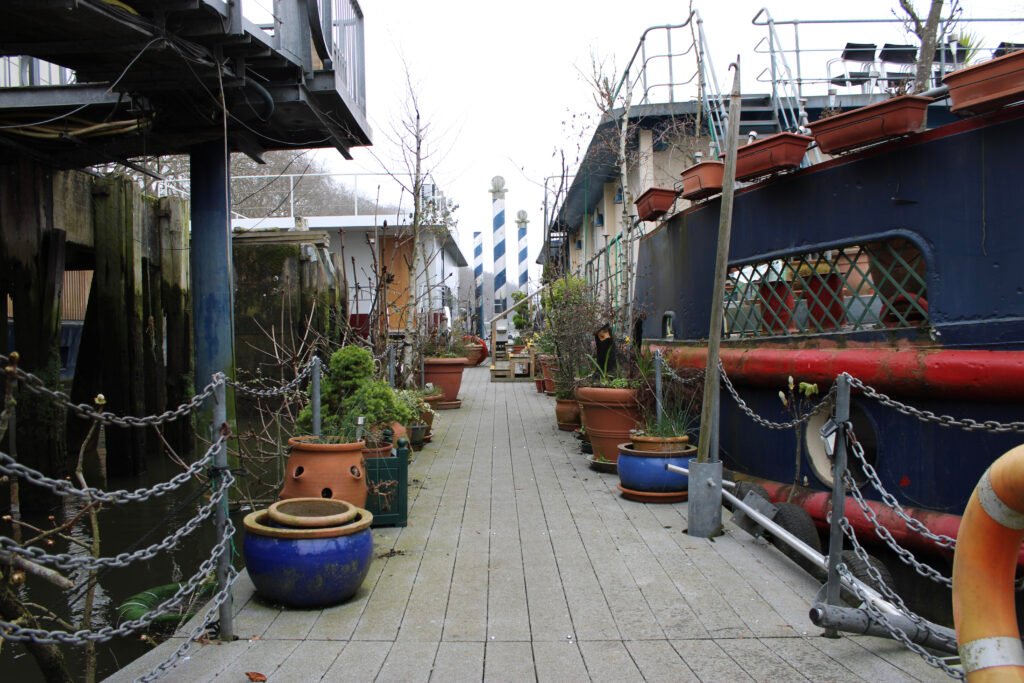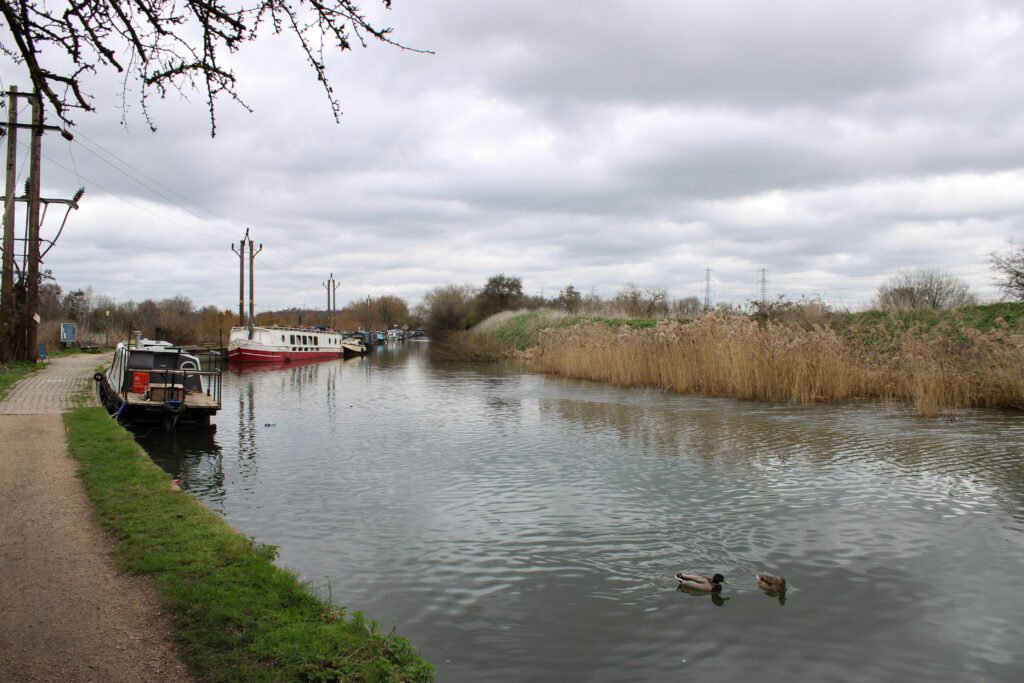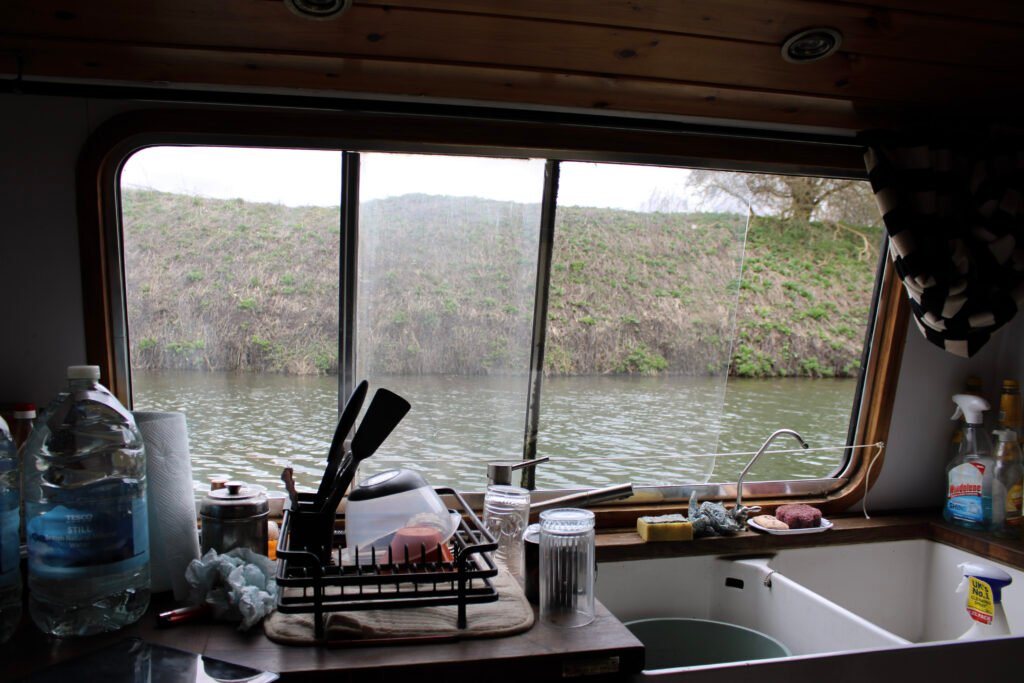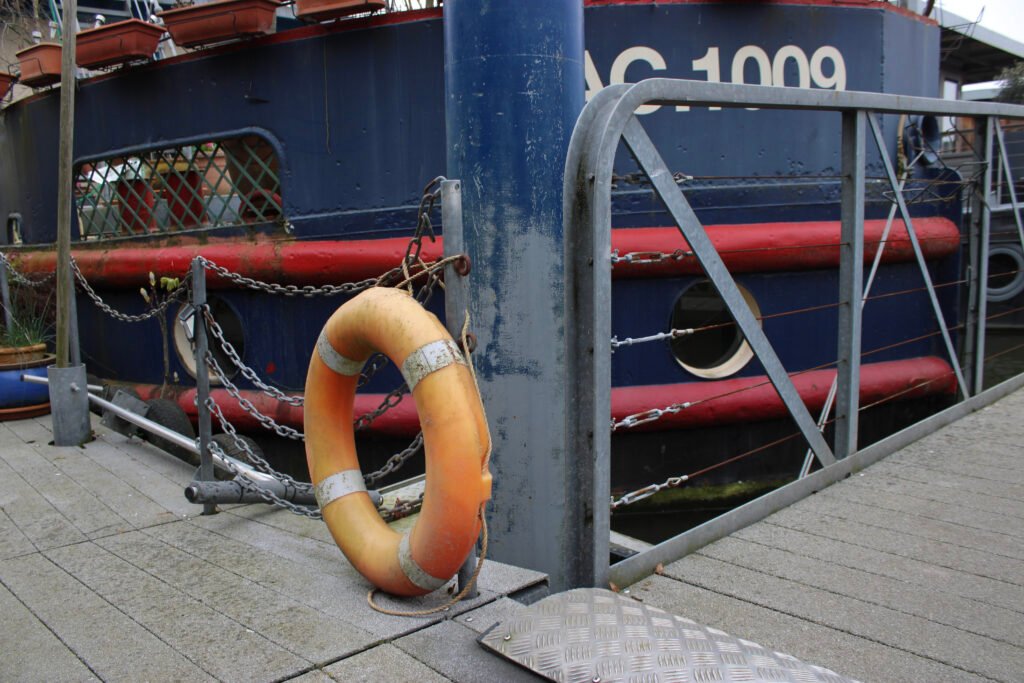
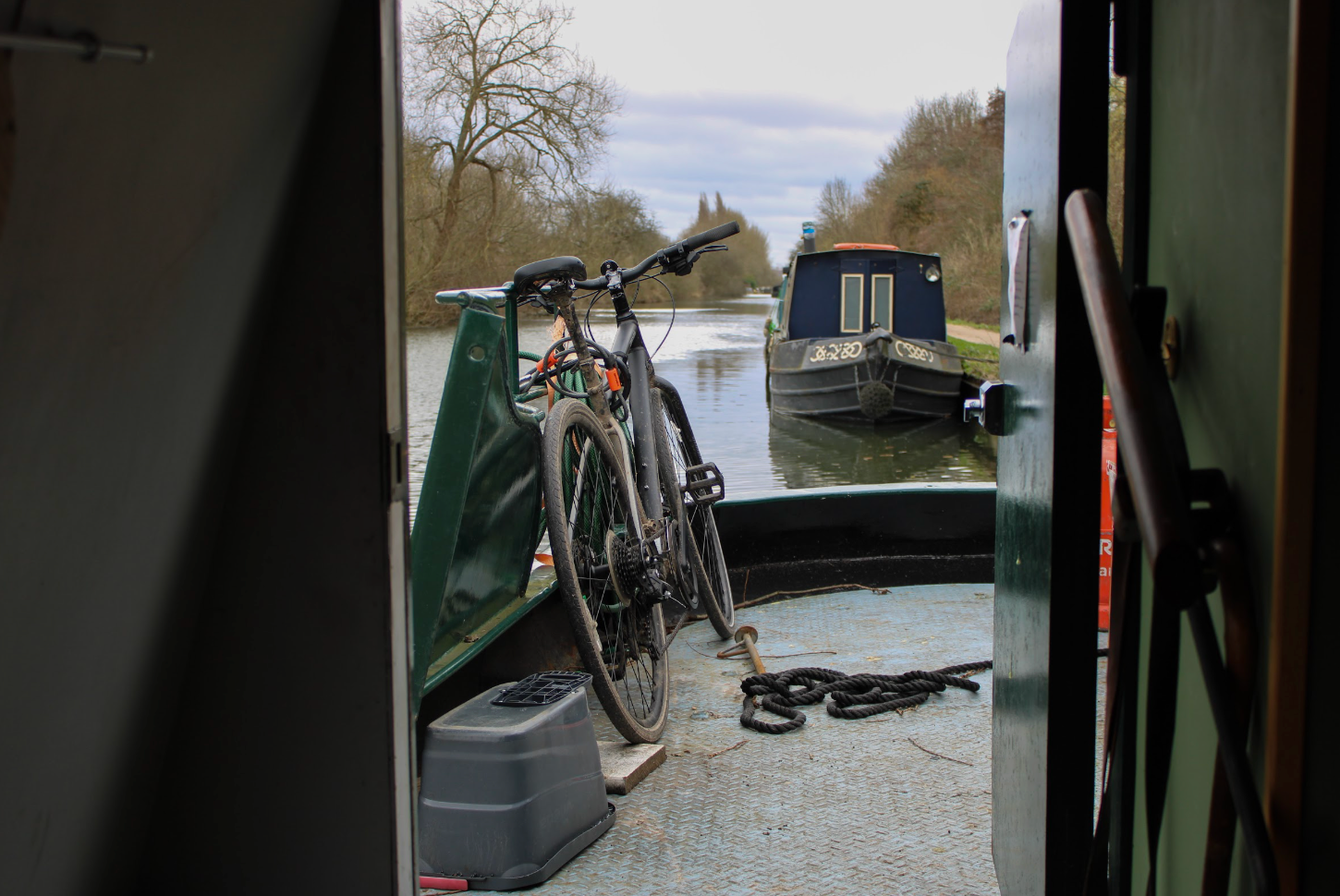
As London’s housing crisis worsens, thousands are turning to life on the city’s canals. For some, houseboats offer community and connection to nature, but life on the water can be as precarious.
Many Londoners feel both doom and pride about their city. It can feel like the centre of the universe and the most inhospitable place to set up camp.
With the London housing shortage at its worst since the Second World War and prices rising over two per cent in the past year, Londoners have been drawn to alternative habitation on the city’s waterways.
Over the last decade, the number of houseboats in London has increased by 86 per cent, to more than 4,000 floating homes. A desire for community, disillusionment with the city and sky-rocketing rent are a few of the incentives for London’s new river dwellers. For some, living on the water is a practical solution. For others, it is a deliberate choice to reclaim control in a city that can feel unrelenting.
Jamie Anker, a 28-year-old lighting designer and student, has been living on a houseboat since 2022. After grief and financial instability hit him in his early twenties, he sought an alternative lifestyle on the water.
Four years later, his boat Esmerelda sits in Uxbridge boatyard. Anker used his inheritance to buy and renovate the boat himself.
Low overhead costs and no monthly rent meant that Anker could “just about coast” using his student loans and savings. The boat was only fitted with a fireplace and compost toilet. He navigated the boat by candlelight at night.
“There is something about being on water that disconnects you from your problems on land. It holds you a lot more. It literally rocks you to sleep.”
“There is something about being on water that disconnects you from your problems on land. It holds you a lot more. It literally rocks you to sleep,” he says. “The majority of people who end up in boats come from precarious backgrounds, because there isn’t the structure in society to support people who have ended up homeless, have mental health problems, or can’t afford to live anywhere else.”
Beau Bennet, a 24-year-old singer who was born on a boat, now lives on a 70-foot Dutch barge with her mum. “The roundness of a boat means you’ve always got this feeling of being held,” she says.
“When I left for University, it was the first time I’d lived in a house,” she continues. “I really didn’t like the fact that it wasn’t swaying. I found it unsettling.”
Her childhood was spent befriending swans in a sanctuary that didn’t feel like London, an environment Bennet credits with nurturing her creative passions.
Her mother, Sabine Stanford, has been boating since she was 30 to escape the inequalities of the property market. “Everyone has a right to a home. Property always felt unfair. Boats are like recycling and low impact living,” she says.
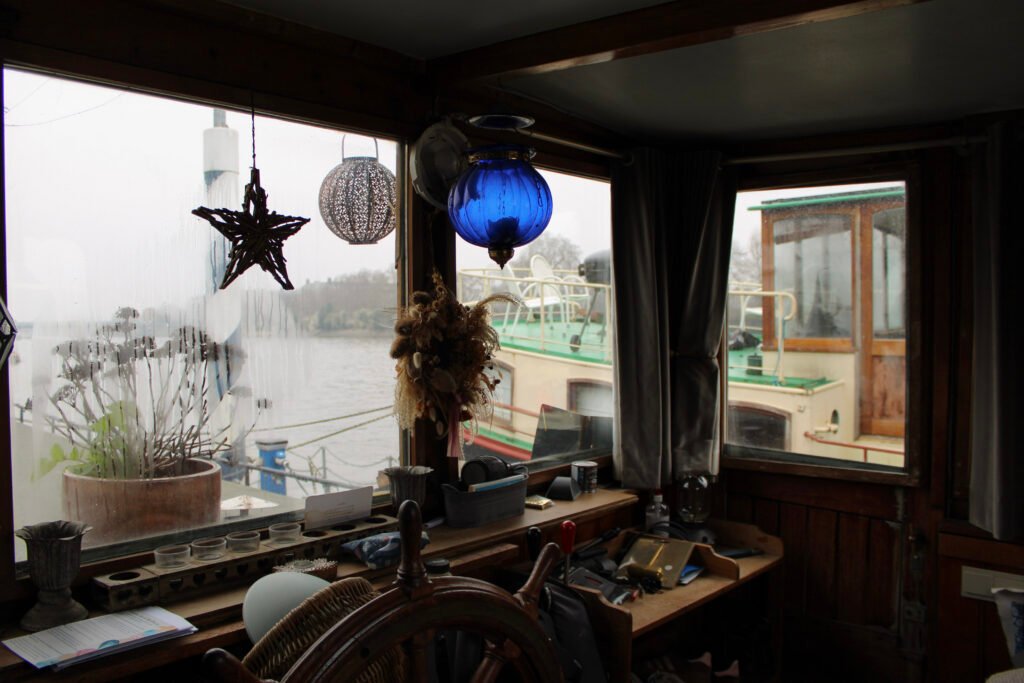
Harriet Jones, a 30-year-old horticulturalist, inherited her Grandma’s mooring in Brentford and bought a small boat. Without it, she would have been priced out of the city.
Jones went in search of “something physical”. Living semi-tidal in the Brentford mooring, she felt connected to the moon. “You need to know what the tides are doing,” she says. “Knowing that I fit into something bigger makes me feel a sense of purpose.”
But Jones soon discovered that the upkeep and solitude of a boat were too much to handle alone. “It’s a massive thing to handle being on your own, ” she says. “You are responsible for your heating, your water, your walls. It makes a huge difference being able to share those jobs between two.”
Jones empties the suitcase-sized waste compartment in her toilet by hand. On one occasion, as she wheeled her excrement down the street, she accidentally knocked the flusher. “Shit just fell out and down my leg. It was gross and embarrassing. My actual excrement was all over the pavement.”
Soon after, her partner joined her on the boat. As a pair, they reaped the joys of boating life, spending two years on board before moving to a house in Hereford.
“There isn’t the structure in society to support people who have ended up homeless, have mental health problems, or can’t afford to live anywhere else.”
Those without a mooring or second pair of hands paint a different picture. Due to their size, narrowboats are most conducive to living alone.
Jeremiah O’Connor, 43, a freelance actor, has lived on his boat since April 2025. He moved to the boat to escape rising rent at his flatshare.
“I thought it would be peaceful, and it is in the day,” he says. But he recounts feelings of “intense loneliness” when mooring on rural stretches outside the city.
Continuous cruising makes it difficult to build anything like a neighbourhood. Just as you learn a neighbour’s name, they are moving on, chasing a new stretch of towpath before their two-week mooring limit expires. WhatsApp groups ping with updates about water points and diesel, but social contact is fleeting.
In October, while he was away on holiday, Jeremiah’s boat was broken into. Since then, boating hasn’t felt the same. “There’s not much you can do,” he says. “You can avoid certain spots and put up stickers saying, ‘beware of the German shepherd,’ but everyone knows there isn’t one there.”
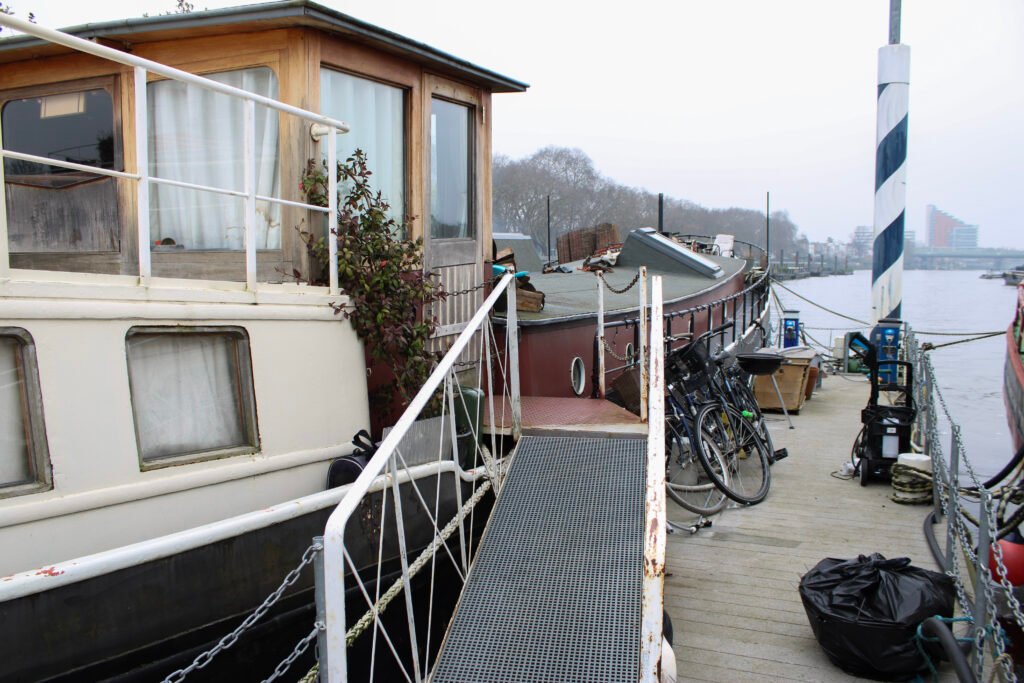
“Just as you learn a neighbour’s name, they are moving on, chasing a new stretch of towpath before the two-week mooring limit expires.”
For Jeremiah, the reality has been confronting. “Before moving here, I was in the passenger seat of a plane,” he says, “just cruising. Now I am in the cockpit, having to drive the damn thing.”
Living on the water is often framed as an escape from the city’s hard edge – from rent and landlords. “Wherever you are in the world, even in the innermost city, where water is, nature thrives,” says Jones. But it also demands resilience.