
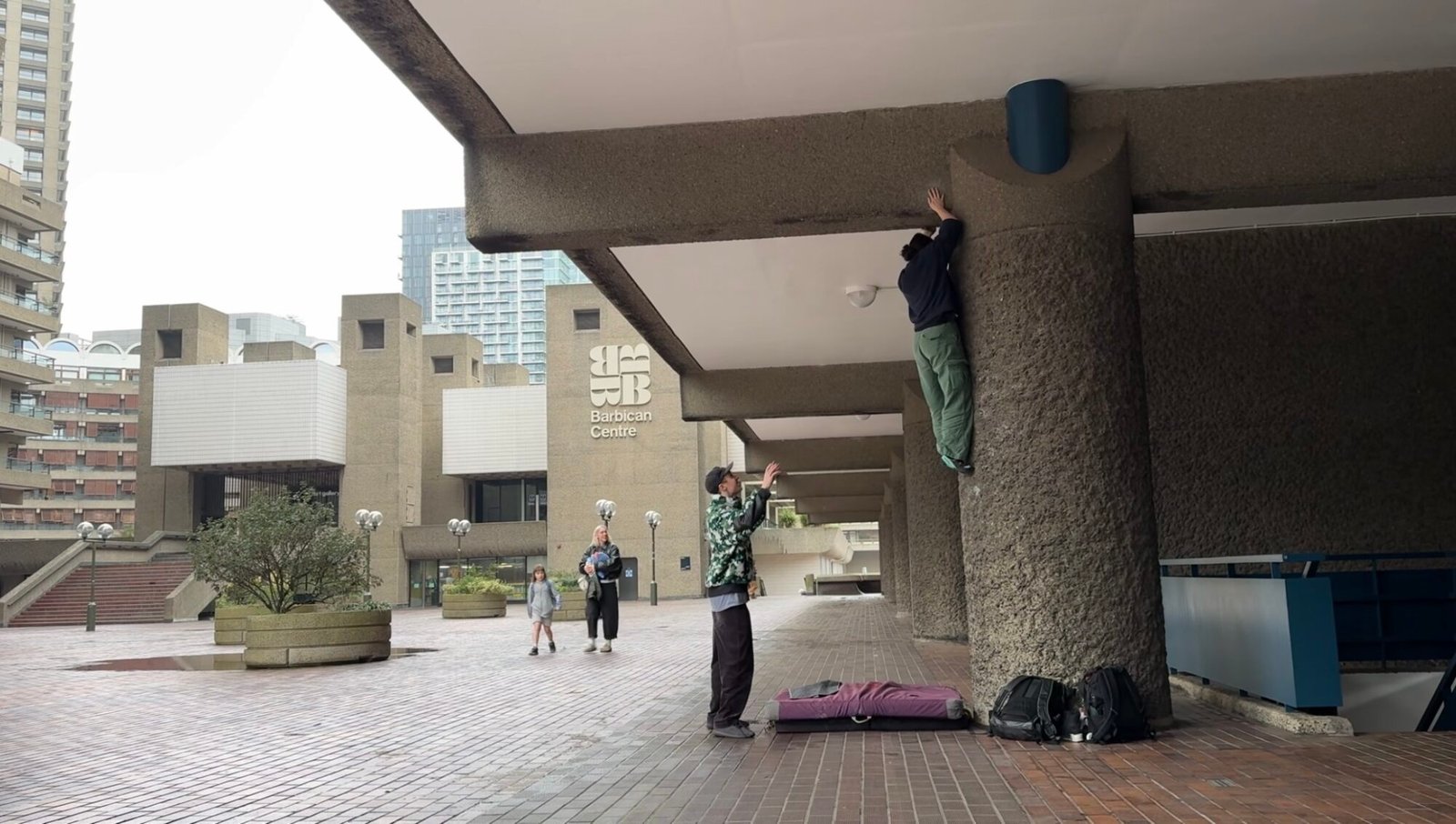
We’ve all seen Alex Honnold free soloing Taipei 101. But have you ever considered having a go yourself? On a MUCH smaller scale, of course…
If you visit a climbing gym on a random Tuesday at 6 pm, it’s hard to imagine that it was once a peaceful place to relax and exercise after work. Now a mainstream hobby for the quarter-life crisis crowd, climbing centres are swarming with people. If you spot an interesting new route, you’ll be peering over shoulders just to see it. And when you finally do, you have two choices: ignore etiquette and camp beneath it so everyone knows you’re next, or be polite and waste ten minutes waiting your turn.
Solly Kemball, a climber who prefers the outdoors, says: “I don’t really like climbing indoors at a gym because there’s too many people. No matter how good the facilities are, there’s normally chalk every where. Rather than being under the sun, you’re under UV light.”
To make matters worse, it’s becoming an increasingly unaffordable hobby. At 10 London climbing gyms, membership averages £73 a month.
The alternative to using an indoor gym is, of course, climbing natural boulders. Except, in London, finding a place to do this requires a bit more creativity. Although London lacks any natural boulders, climbers have been using the surplus of concrete around them as their playground. ‘Buildering’, as they call it, is similar to parkour and involves climbing on buildings, bridges and even statues.
Invited by local buildering experts Alexander Norden and Bobby Gordon-Smith, Kemball tried buildering in London for the first time. “I thought the whole idea was quite funny. I just go and climb a section of a building and give it a climbing grade,” says Kemball. “It piqued my interest enough that I didn’t mind going and trying it for a day to see what it was like.”
Norden has scaled various concrete routes in London, from The Barbican to the Southbank Centre. He started buildering while attending university in Oxford, combining his love for bouldering and parkour.
Evidence of buildering dates back to 1901 when alpinist Geoffrey Winthrop Young began publishing his ascents up buildings in Cambridge in a book named The Roof-Climber’s Guide to Trinity. It quickly gained popularity, particularly in the architecturally dense city of New York. In 1915, American climber Harry Gardiner made the front page of a newspaper for scaling a New Jersey courthouse. By the 1970s and ‘80s, ‘free soloing’ – climbing tall buildings without a rope and harness – had become popular. In 1994, Alain Robert – also known as ‘French Spiderman’ – free soloed the Empire State Building illegally.
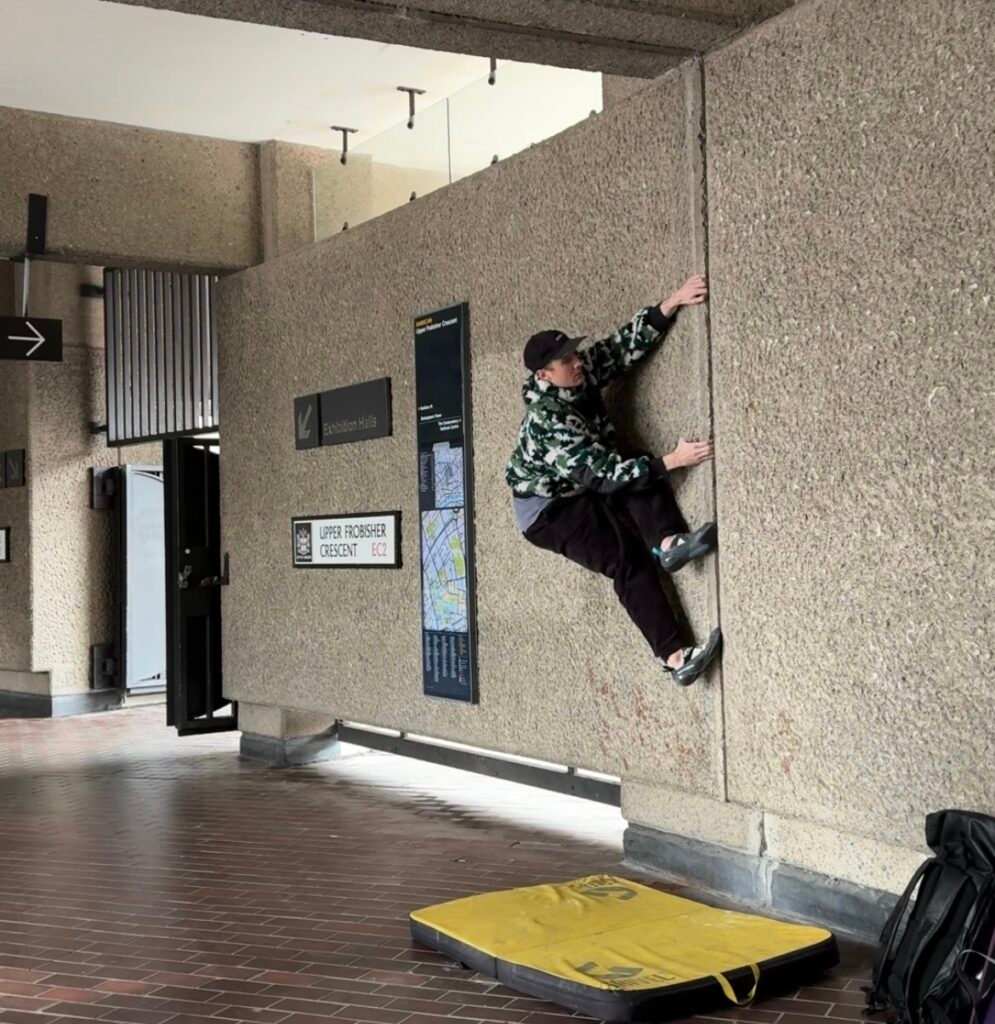
Only a handful of climbers in the world are willing to risk their lives to scale a tall building, but buildering in 2026 doesn’t require you to climb higher than you could safely fall.
Of course, witnessing someone scale part of a building in central London with only a small padded mat as a safety net draws attention: “What was quite fun with buildering is you’d go to an area, and there would just be people watching like, ‘What are these guys doing? And why are they doing it?’ And it’s like, ‘Why not?’” says Kemball.
For Norden, going buildering alone can be socially awkward. Without the “social momentum” of a group for encouragement, it makes him feel like “one weird person doing a weird thing”.
Alongside Gordon-Smith, Norden began posting buildering videos on his Instagram, @buildering.London. The account immediately gained attention. “I posted the first one on the page, and then it went really viral, got a million views on Instagram, which was not what I was expecting. And then from that point, it was very much a case of people actually do care, we need to post a lot and keep this going,” says Norden.
Buildering is popular among onlookers because the structures people climb are familiar to Londoners, Norden suggests. While it can be hard to gauge the difficulty of someone climbing a natural boulder, watching somebody climb a building you walk past every day makes the challenge easier to comprehend.
Norden has mapped close to 100 buildering spots in London. Although having a guide is helpful for beginners, part of the beauty of buildering is the creativity and freedom to set your own routes, which you don’t get with indoor climbing. According to Kemball, anyone walking along the street who sees a wall or building they want to climb can, provided they’re not trespassing.
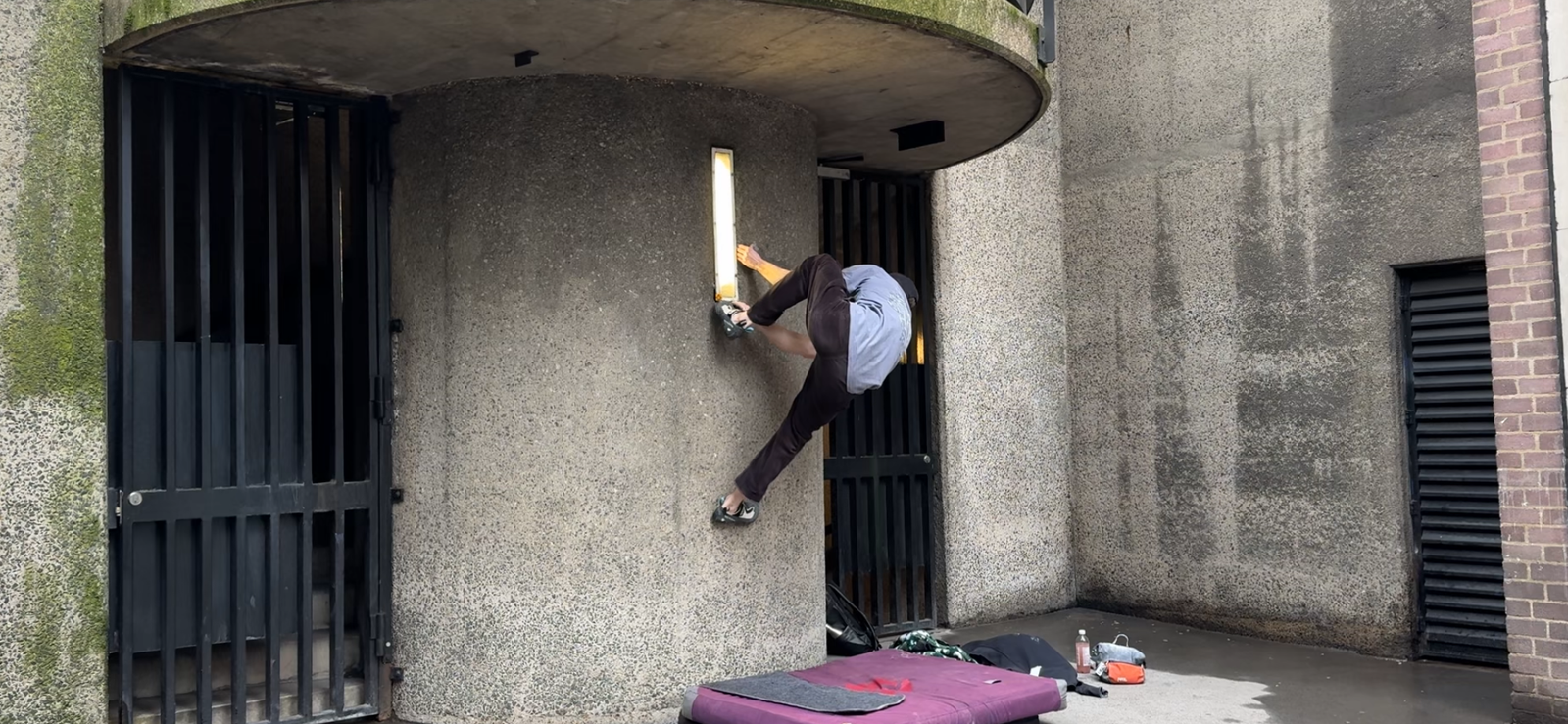
Named ‘Cornetto’, the Duke of York’s Column near St James’s Park is “one of the coolest” climbing tasks for Kemball. It’s easy to see why he graded the route a “V7” – an intermediate climb. With only the outer corner of the statue’s plinth to hold onto, the route requires the climber to heave themselves to stand on a tiny chip on the corner – no thicker than a pound coin.
Unfortunately for climbers, buildering hotspots like ‘Cornetto’ have also caught the attention of police officers. “I can’t come and climb on it because they just kick you off immediately,” says Kemball. “So the police come over and be like ‘You guys aren’t climbing all this statue, are you?’.”
As the legality of buildering falls in a grey area, climbers should be aware of how to deal with security guards or police confronting them. “You kind of have to be sensitive about understanding that if someone comes over and says, ‘Do you mind not climbing this’, you have to go, ‘yeah, that’s absolutely fine. Sorry, we’ll move on now’,” says Kemball. “Don’t be aggressive. We have no right to climb buildings at all.”
Though some London parks have artificial boulders, such as Shoreditch Park and Mabley Green, climbing the same route becomes repetitive. Climbers thrive on trying creative and original routes that allow them to solve different problems, and finding those can be challenging in London.
Norden admits: “I think almost by necessity, people do it because there’s nothing else. Some of the climbing is really good, but a large part of it is the fact that that’s what’s available.”
Video filmed by Sonni Hendrickson.