
Dating apps are exhausting Gen Z, and meet-cutes feel like a relic of the past. Could a Tuesday night chess club in east London offer the romance I’m looking for?
Young people are constantly being told by the media how sad, lonely and single they are. “Prudish Gen Z aren’t looking for love – and they’re definitely not looking for sex,” says The Telegraph. “Gen Z ‘resent’ online dating but ‘too embarrassed’ to approach love interests in person,” proclaims Daily Express.
In some ways, the data proves these headlines right. Gen Z are much less lascivious than our predecessors, having sex on average 36 times a year, while Millennials sow their wild oats 73 times a year. And we do seem to resent dating apps – a 2025 Forbes survey showed that 79 per cent of Gen Z dating app users felt “burned out” by the experience.
I myself am not a dating app user – my self-esteem struggles enough with the constant bombardment of beautiful and successful people that my Instagram algorithm feeds me. Raised on Sex and The City and When Harry Met Sally, I have always pictured meeting my future partner as my shopping bag splits and he picks up my free-rolling aubergine, or starting a conversation after heated glances across a bar. This has become trickier with the rise of Ocado and the slow decimation of London’s night life.
“It’s much less daunting to go to an organised event like this than to sit in a regular bar alone.”
So, on a damp evening in February, I went looking for love at chess club, despite not having checked a mate since a primary school lunchtime club.
I had heard friends talk about Knight Club, a weekly chess club held at Cafe 1001, just off Brick Lane, one of many chess clubs that have begun in London in recent years. From London Chess Club in Bermondsey, to London Women’s Chess held at Pancras Square Library, each borough seems to hold its own weekly event to bring together chess enthusiasts. The first session organised by Knight Club in 2023 attracted 16 players – now the weekly events regularly draw almost 300 attendees.
In the past few years, Gen Z’s longing for community and third spaces has resulted in an influx of “clubs”. Together we run, read, cook and climb, attempting to make friends whilst practicing our hobbies. And some of us, though we daren’t admit it, harbour a secret hope that we might meet someone special.
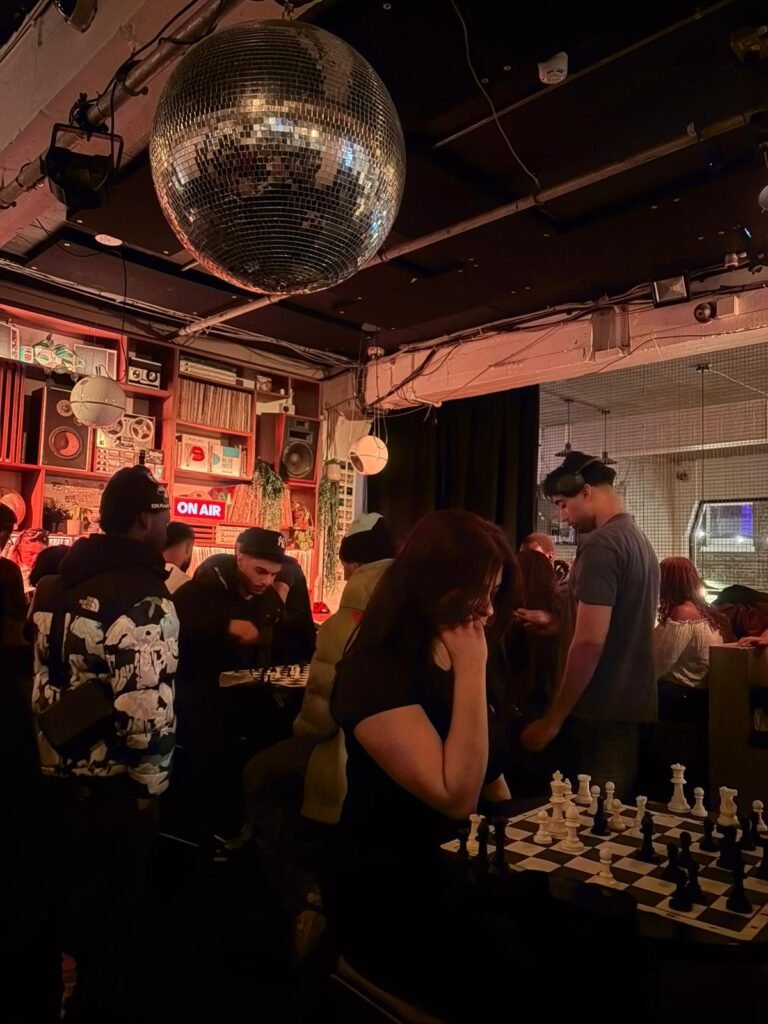
From Wednesday to Monday in the trendy east London venue, house music blares from the decks of aloof DJs while creatives sip on Blood Orange and Hot Honey Margaritas and discuss the pros and cons of five-toe shoes. But on Tuesdays, tables are cleared and topped with roll-out chess boards. The music is more ambient, playing at a level that allows for conversation but invites focus. Silence is never awkward across the chess board.
“Playing opposite a stranger was nervewracking, but my fears were numbed by my competitive instinct to destroy my opponent.”
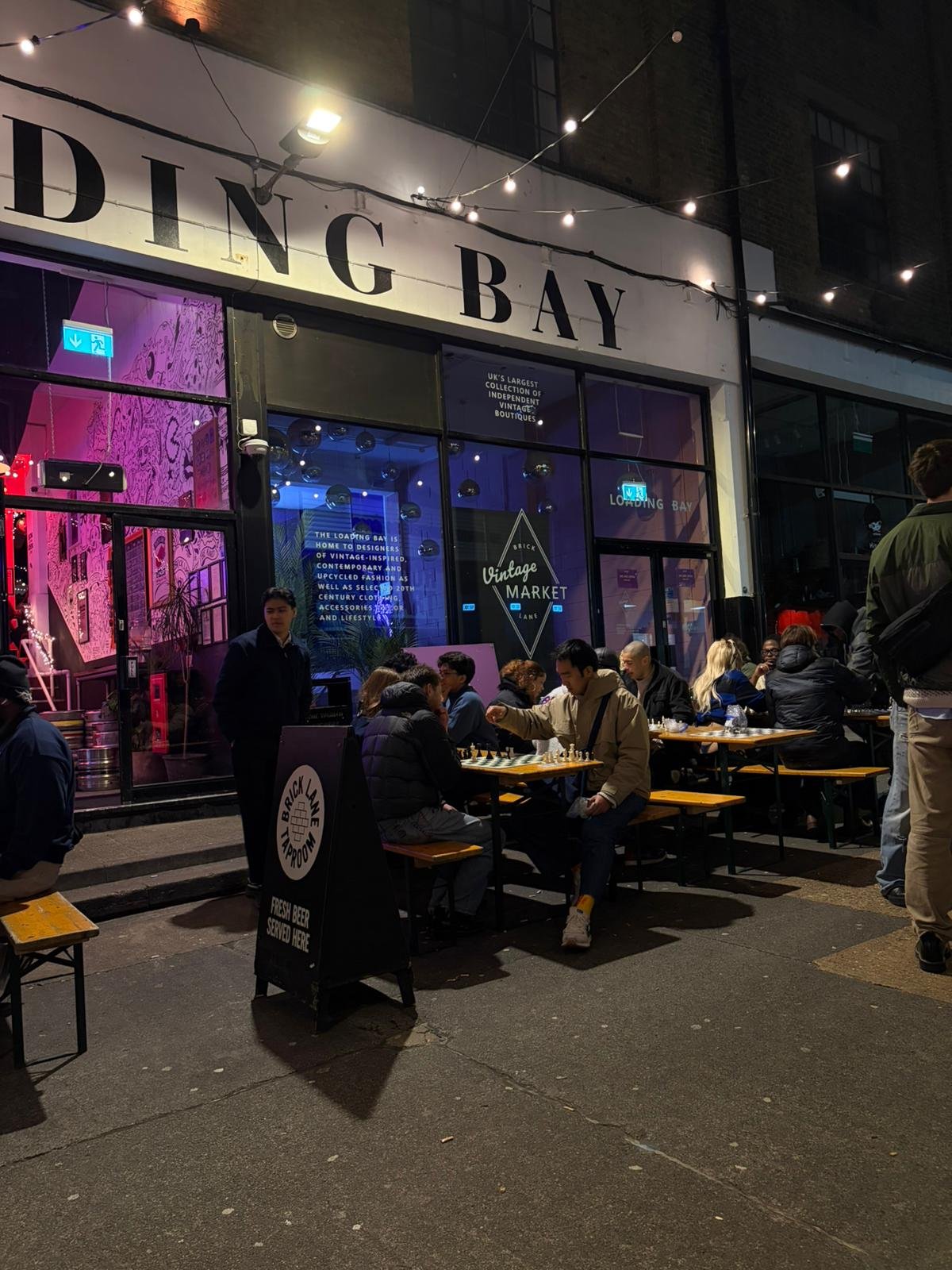
Walking up to the bar, all preconceived caricatures of a chess player in my mind were crushed. The venue was filled with well dressed, well groomed young people, playing chess with friends and strangers alike. The event is so popular that players sprawled from inside the bar out onto the street – half of Dray Walk was filled with picnic style tables and benches, with chess fanatics bundled up in coats and scarves, braving the winter cold to dabble with the checkered board.
Speaking to the other chess club attendees, it became clear that I was not the only patron with romantic intent. Sem Osian, a 22-year-old who had traveled to Shoreditch from Twickenham for the chess club that evening, told me the weekly event was the best place to speak to women. “It is a great place to start a conversation. You have an easy opener. If you see an attractive person you can just say, ‘Do you want to play?’ It doesn’t have to be any more complicated than that.”
Organic meet-cutes are wildly romanticised by Gen Z, who feel nostalgia for a by-gone era that they themselves never experienced. As a generation whose communal organisations – youth clubs, sports facilities and performing arts groups – had their funding continually cut throughout our lifetimes, our craving for shared spaces to meet new people is endless. And having things in common can even strengthen a relationship; one study found that 64 per cent of married couples believed that common interests helped their marriages to succeed.
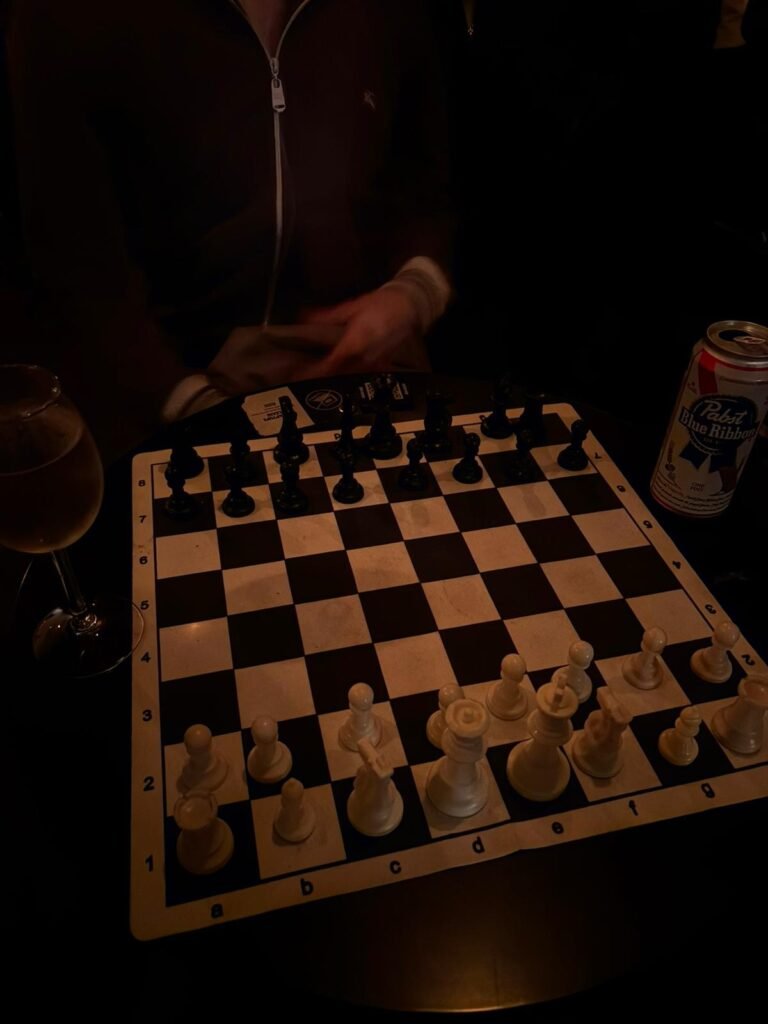
Playing opposite a stranger was nervewracking, but my fears were numbed by my competitive instinct to destroy my opponent. With a glass of sauvignon on one side of the board and a can of Blue Ribbon on the other, conversation bounced between chess strategies, other hobbies, music taste and, only slightly concerningly, past relationships.
After brutally losing a game to Osian, I struck up a conversation (and a game) with Rachel McNutt, a Canadian chef on holiday in London. She had come to the chess club on one of her seven evenings in London for the crowd that it attracts. “You always meet interesting and open people, and it’s much less daunting to go to an organised event like this than to sit in a regular bar alone.” I called checkmate just as the bar staff began to collect the pawns and rooks that peppered the venue.
This week at chess club, I sadly did not find my knight in ivory armour. However, I made two new friends, I rediscovered a passion for a skill that I have not flexed since primary school, and I had a ridiculously fun Tuesday evening for the price of a medium glass of house white. Plus, who knows, maybe my future partner will be at the chess club in the near future, just one move away.