
From Persian Nowruz to Pagan Ostara, communities in London and beyond celebrate the new light of spring in wild and wonderful ways.
Few things cause a collective shift like the first speckles of sun in London. The dripping dregs of an evening’s monotony are transformed into the sun-soaked beginnings of a new chapter.
In London, the rights of spring are performed as 5pm pints along canals and riverbanks, late evening exercise classes and groups of friends flocking to the city’s parks. These activities tell of a new lease of life. 20 March marks the beginning of astronomical spring (the spring equinox) where daylight lengthens, an event which comes as no small relief to Londoners. This season of re-birth, growth and renewal is laden with ritual and heritage in cultures around the world.
NOWRUZ
Across Central Asia, the Middle East and Kurdish regions of Turkey and Iraq, the first day of spring is celebrated as the Persian new year, Nowruz. The tradition is not strictly religious and is seen by most Afghan people as part of their heritage. It has been handed down over the millennia through the ancient religious practice of Zoroastrianism, says Darius Nashimi, director of the Afghanistan and Central Asian Association.
At four months old, Nashimi’s family fled the Taliban, arriving in London in 1999. “It was a very dangerous journey across Europe. My dad spent twelve hours in the back of a refrigerated lorry,” he says. “I’ve grown up in a family where celebrating and learning about Afghan culture is important, and Nowruz has been central to that.”
“Nowruz symbolises light over darkness. It represents hope and a rebirth of nature”
UNESCO declared Nowruz an Intangible Cultural Heritage of Humanity in 2009, and the United Nations assembly recognises 21 March as International Nowruz day. Yet the event flies under the radar of many Westerners.
“Nowruz symbolises light over darkness,” Nashimi says. “It represents hope and a rebirth of nature after a year has passed. But, for a country like Afghanistan, the most important thing is unity across the different ethnic groups. Nowruz is a time where, no matter what ethnicity you are, people come together to celebrate the new seasonal year.”
To mark the occasion, Afghans lay a traditional Haft-Sin table with items symbolising life and well-being. The table features an arrangement of seven items with names starting with the Persian letter ‘S’: apples, garlic, vinegar, sumac, wheat sprouts, dried fruit and sweet pudding.
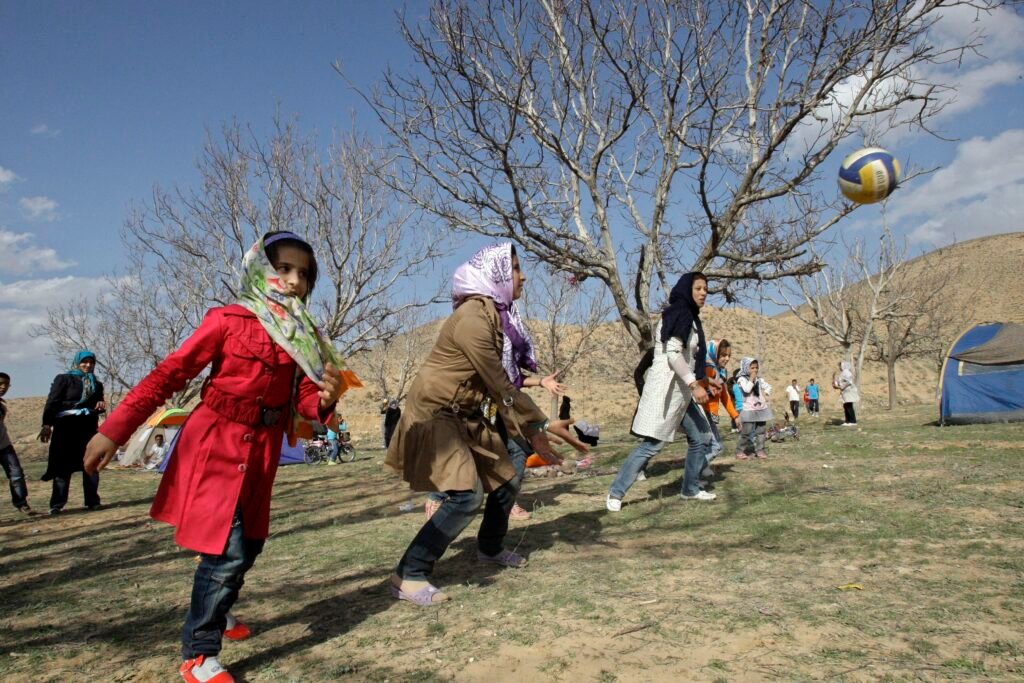
Nashimi explains that people from his hometown in Afghanistan celebrate with picnics in the countryside. “They go to parks, gardens or green spaces and spring clean the house to signal fresh beginnings.”
In Mazar-i-Sharif in northern Afghanistan, Mela-e-Gul-e-Surkh (The Red Flower Festival) is the crown jewel of the celebrations. The fields surrounding the Shrine of Hazrat Ali, the blue-topped mosque, are lined with red tulips and a sacred flag, the Janda Bala, is raised to mark the beginning of a new year. The atmosphere is palpable, Nashimi reflects, and “friendships resume or restore with people you haven’t seen in a long time.”
IMBOLC AND WOMANHOOD
In Ireland, the weather doesn’t often permit outdoor celebrations, but the beginning of spring is deeply entwined with Irish history.
Imbolc, celebrated on 1 February, is the mid-point between the winter solstice and spring equinox. Traditionally a pagan holiday, according to Róisín Farrelly, a Dublin-born 25 year-old, it was then made to tie in with the celebration of Lá Fhéile Bríde – St Brigid’s Day. Like many Celtic and Pagan traditions, it was infused with early catholicism to ensure that people celebrated the holiday, Farrelly explains.
In 2023, Saint Brigid’s Day was marked as a bank holiday – the first Irish public holiday named after a woman. In the same way that the Claddagh Ring and other symbols of Irishness have become trendy online (The Celtic Revival), the new bank holiday has seen a surge in women-centred events to celebrate the Irish spring, says Farrelly.
“A lot of the mythology around St. Brigid is about women empowerment or at least retrospectively linked to it,” says Farrelly. Ireland’s only female patron saint is said to be responsible for the country’s first abortion. The myth, originating in 650 AD, recounts Brigid making a foetus in a pregnant nun disappear without any pain.
“Events I have gone to recently have included artistic portrayals full of huge vulvas and a sea swim to raise money for Women’s Aid. ‘Revolutionary Women’ was a big theme this year, with a walking tour in Dublin.
“In the same vein, just before the spring equinox, Ireland celebrates the Sheela na Gig. Carved onto medieval churches and monasteries, the Sheela is a mythological figure of a squatted naked woman with an exaggerated vulva,” she says. “The idea that the Sheela is a pre-Christian folk goddess symbolising fertility, rather than an explicit ‘hag’ warning early Christian men against lust, is a new idea. However, many believe the timing of the celebration aligning with the equinox is not coincidental.
Either way, during March in Ireland, “you end up in a room, typically, with a lot of other women who are engaged and empowered by this stuff and that feels really positive,” says Farrelly.
“It was not that long ago that a lot of what womanhood meant was restriction and fighting that restriction. Women have space, time and social power to enjoy things and make connections in a way that has nothing to do with men,” she says. “Meeting up doesn’t mean they are in opposition to men, because what women do is no longer defined by rejection of the patriarchy, it is just its own thing.”
“You end up in a room, typically, with a lot of other women who are engaged with this stuff and empowered by it and that feels really positive.”
For many like Farrelly, the seasonal connection to womanhood is both implicit and refreshing.
Megan O’Rourke, a 25-year-old film-maker from Dublin, says of the event: “There is rebirth in the air but also, celebrating a woman just because she was an interesting character and is a patron saint. It’s not because she gave birth, died, or endured any great suffering.”
PAGANISM
Spring’s connection to womanhood is intimately felt in Paganism. Éilís Rooney, 26, is a third-generation Irish immigrant with a special interest in witchcraft and Pagan practice.
Ostara, the Pagan celebration of spring, shares the same root as the word oestrogen. Rooney says: “In people with wombs, the female hormone oestrogen rises after your period, so your follicular phase, which is after you bleed, is referred to as your Easter, or your spring.”
Maisie Hill, the UK’s leading hormonal health expert, popularised the idea of a woman’s cycle as different seasons in her book Period Power. The book explains that during the follicular phase a woman feels “more positive, socially orientated, resilient, curious and has a higher libido”.
Living in South East London, Rooney connects to her womanhood through the “subtle, or not so subtle” references to birth, fertility and wombs scattered throughout the season. However, she says, “As a queer person, I shy away from that side of it in group dynamics because it’s actually a time for rebirth and new life for everyone, regardless of what sexual organs you have.”
Rooney holds informal events in her community garden to gather people around the eight Sabbats – the cycle of pagan festivals marking seasonal shifts, agricultural milestones and solar events. The spring equinox evokes themes and energies for her community. “We have a society that pushes a monoculture where you stay the same the whole year. The whole year is about grind and working,” she says, “but the earth and its weather, temperature and seasons should affect you.”
Rooney believes that celebrating seasonal changes allows people to recognise that the earth holds different energy throughout the year. “You are allowed to be in touch with these shifts and adjust your life to them,” she says.
A pushback against hustle culture and monolithic living has certainly gained popularity among Gen Z. IPSO reported in 2024 that Gen Z view outdoor connection as an opportunity to consciously switch off, escaping the focus on performance that social media demands.
The Google search term “seasonal living” reached an index high in the UK during early December and then again in late February, suggesting that the energies of big seasonal shifts are felt more overtly than we think.
“Watching the sun rise and setting, is really good for human health and our ancestors knew this perfectly well without our scientists to tell them.”
For Pagans, the celebrations are less customary than in other cultures. While Paganism is organised around two sets of festivals – the land and the solar – Marian Green, author of over 20 books on witchcraft and Paganism, explains that there is no typical pagan.
“The spring equinox symbolises light winning out over darkness, so Pagan groups will drive out whatever symbolises darkness to them,” says Green. In the West Country where Green is based it is customary for Pagans to go to Avebury, Stonehenge or another stone circle to watch the sun rise.
“Being a Pagan is a vague thing”, says Green. “It’s a thing in your heart. You feel drawn to connecting with the Earth and the seasons; the sun, the moon and stars.” While it might feel abstract and is often associated with otherworldly witchy-ness thanks to media depictions, at its heart, Paganism is about connecting with the environment.
“Simply, being in touch with nature, walking in the woodlands, watching the sun rise and setting, is really good for human health and our ancestors knew this perfectly well without our scientists to tell them.”
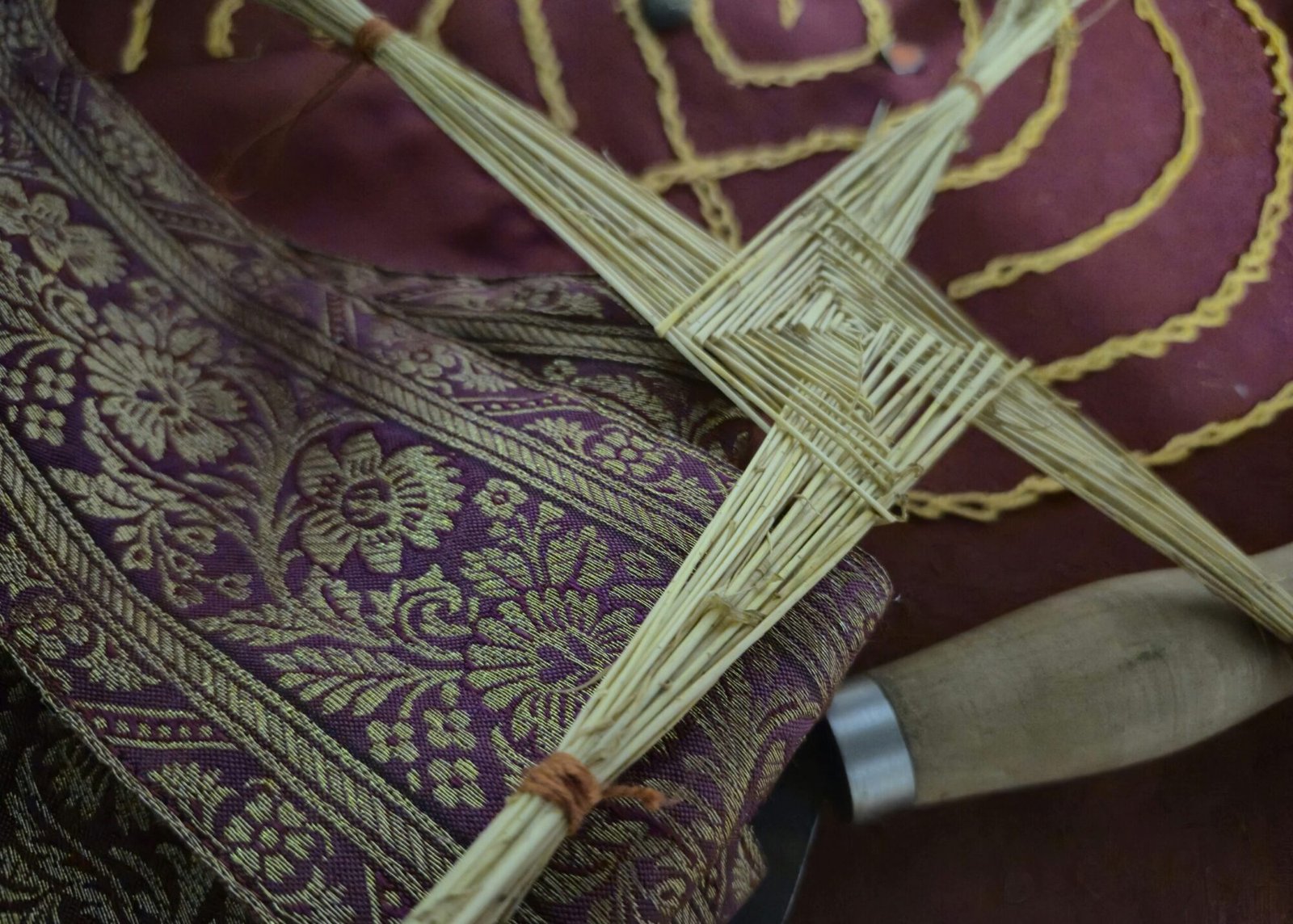
Featured Image Credit: UNSPLASH — Brigid’s Cross made of flax on a red altar at the Selkie Sanctuary (IG @selkie_sanctuary)